
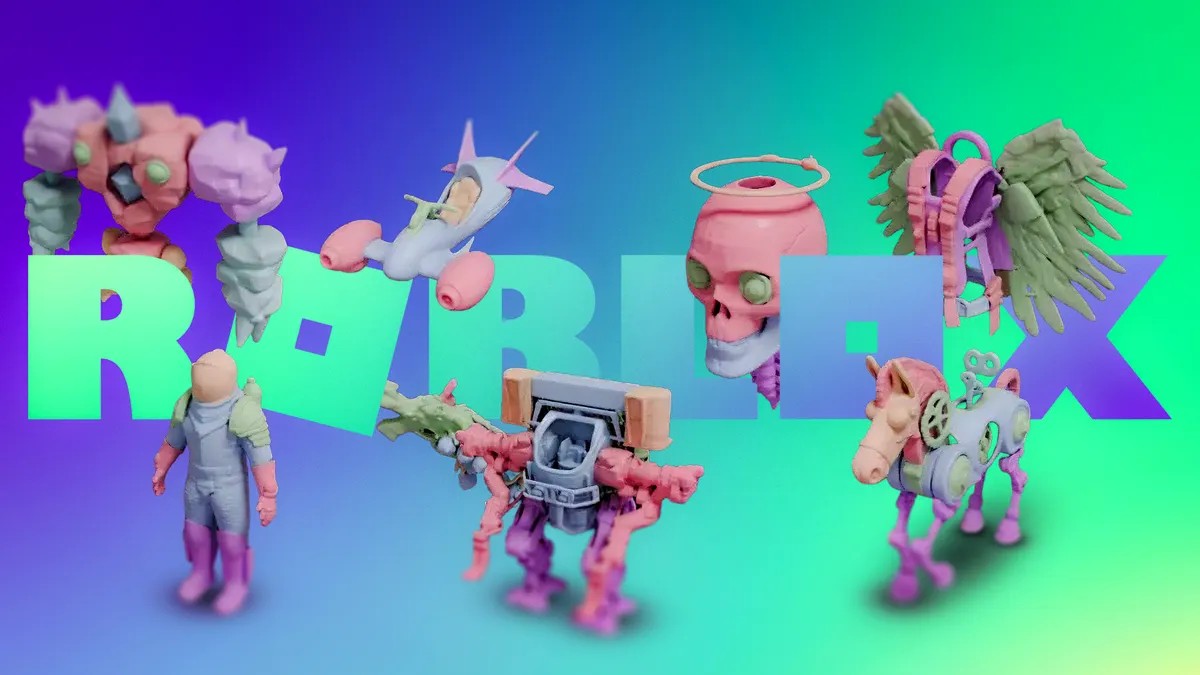
You’re racing. The car is glitchy. It has six wheels and no hood. Why? Because the AI just made it.
Roblox is folding CubePart into its ecosystem right now. It’s not just static shapes anymore. This stuff moves. It has physics. A centipede tank? Sure. A bat-drone that flaps? Easy. The goal isn’t just pretty pictures. It’s functional chaos.
Working parts, weird results
Roblox published research on this yesterday. It builds on the 3D AI objects they dropped last year. But this is different. Last year it was statues. Today it’s machinery. The model trained on two million parts and half a million assets. They claim it labels pieces faster than anyone else. The result is parts that actually fit together inside existing game engines.
Think tanks. Robots. Skulls with cameras inside.
“A floating surveillance unit housed inside a human skull.”
Sounds cool? Maybe. It sounds like a horror movie prop department went on strike and hired a algorithm to finish the shift. The paper describes “sensor halos” and weapons carved from “living elder trees” that shoot enchanted berries.
Anupam Singh, the SVP of Engineering at Roblox, sat me down on Zoom. He’s ambitious.
“Our dream is that any two-person studio creates a massive game,” Singh says. “Why not let players become creators without opening studio software?”
That’s the hook. Lower the barrier. Let everyone build. But here is the rub. Generation is boring after five minutes.
“Unless you integrate it into very interesting gameplay… it becomes a little bit boring.”
So they have to put these moving tanks in races. Or fights. If you just stand there watching a golem assemble itself, you leave. Singh says natural fail points will keep the machines from growing to the size of the moon. They aren’t organic. You won’t see living aliens. Yet. More likely: suits, vehicles, industrial gear.
Why are you doing this?
I asked my kid. Thirteen. Plays Roblox every night. He frowned. Said, “Why?”
I get it.
Moderation will happen. Roblox isn’t leaving this wide open for every troll. Generative content gets scanned. But the tool is only available in games that opt in. It’s not a global cheat code you pull out at will. And there is money to be made. Will the server costs for this kind of real-time generation eat into the fun? Or require a sub? We don’t know.
Then there is the next phase. Roblox Reality. Coming late 2027. It aims for 2K resolution at 60fps using AI. It will probably cost more.
Singh thinks the real shift isn’t just objects. It’s worlds. Right now generative AI is lonely. You make something alone. Game Cartridges is an attempt to fix that. Multiplayer collaboration in a shifting world. Google tried something similar with Genie 3 in February. It’s messy. World models destabilize when people start punching the scenery.
“What if [everyone] was in the same world… and I would see what you changed?”
Singh says that is the goal. A shared reality where the ground moves when you want it to.
Does that sound like the Metaverse?
Roblox doesn’t say that word anymore. But describe that sentence out loud and see where you land. It lands right on the edge of AR glasses and headsets.
Roblox isn’t alone. It’s just loud. Think of them as a canary. They’re going deep into AI-generated terrain. And other studios? They are right behind them.