
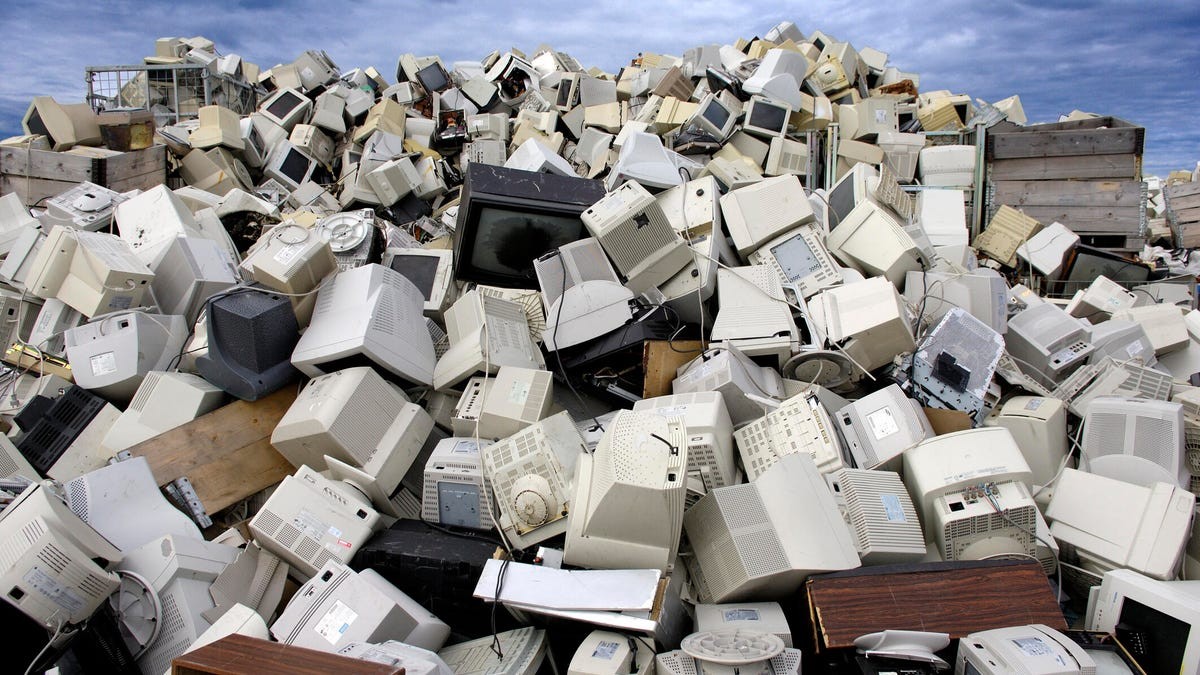
Old electronics are ghosts.
The laptop you replaced two years ago sits in the office drawer. The printer that quit fighting is buried in the garage. Somewhere behind the winter coats is a desktop tower from 2014, gathering dust, collecting existential dread. None of it works. None of it leaves on its own. You tell yourself you’ll handle it, but dealing with tech feels heavy, so you don’t.
Stop procrastinating. It’s not that hard. Major stores and makers want this junk back for free, usually all you have to do is wipe the data and drive it over there.
The Retail Loop
Best Buy and Staples basically function as e-waste dumps now, the good kind. You can walk in with a brick of a computer or a scanner that only speaks dial-up, hand it over, and leave. They don’t care if you bought a single pen at that specific store.
Sometimes you get store credit. Sometimes you get a discount. Mostly, you just get your closet back without the guilt of tossing lithium into the regular trash. It’s the lazy man’s environmentalism, but it works.
There is one catch. Data.
You aren’t handing over plastic. You’re handing over your life history, your passwords, maybe a photo you didn’t think to delete. Don’t just drag stuff to the trash can, that’s child’s play. You need a factory reset, a full drive scrub. Ten minutes of your time ensures your old tax returns don’t end up as bargaining chips for a stranger.
Why keep fixing a machine that gave up on you? Let the recyclers break it for parts.
How to actually recycle
It’s free, mostly, but the rules are a patchwork quilt of policies. Here is the breakdown of where to go, and what they actually take.
-
Apple. Yes, Apple lets you recycle old Macs and peripherals for free, but only if you are buying new gear simultaneously. The free service is tied to a purchase, which is a sneaky catch. If you’re not spending cash there, try Gazelle. They buy old MacBooks. You get a prepaid box, mail it in, done.
-
Best Buy. The daily limit is strict. Three items per household per day for most gear—printers, e-readers, vacuums. But for laptops, you can bring five. Monitors? That’s a state-by-state nightmare, often not free. You can also mail things in, but you pay for the box. $23 for small, $30 for large. One editor recently paid $30 to get rid of a broken TV/VCR combo because lugging it to the landfill wasn’t an option. Price of convenience.
-
Office Depot (and OfficeMax). The merged entity has a trade-in program. They might give you a gift card. If your gear is worthless scrap, they recycle it for free. If you prefer mail-in, they sell boxes. $8.39 for 20lbs. $18.29 for 40lbs. It’s cheap, but it isn’t free.
-
Staples. Probably the most generous. Desktops, laptops, printers—just bring them to the counter. It doesn’t matter if you bought them there. They also have a battery recycling initiative that has spiked usage from 50 batteries a week to thousands. It’s almost effortless.
Finding a center
Can’t find a major retail box nearby? Or maybe you just want a dedicated facility instead of a checkout counter.
Use tools like Earth911 or the Consumer Technology Association search engines. Plug in your ZIP code, look for places that explicitly list computers. Be careful. Many results are for mobile phones, not towers, and nobody wants to drive three towns over to find out the wrong size box was delivered.
There are other options too. Greener Gadgets lists various local programs that keep things out of landfills.
It’s all right there, waiting in your closet. The hardware doesn’t disappear if you ignore it, it just waits. Wipe it. Bag it. Drop it.