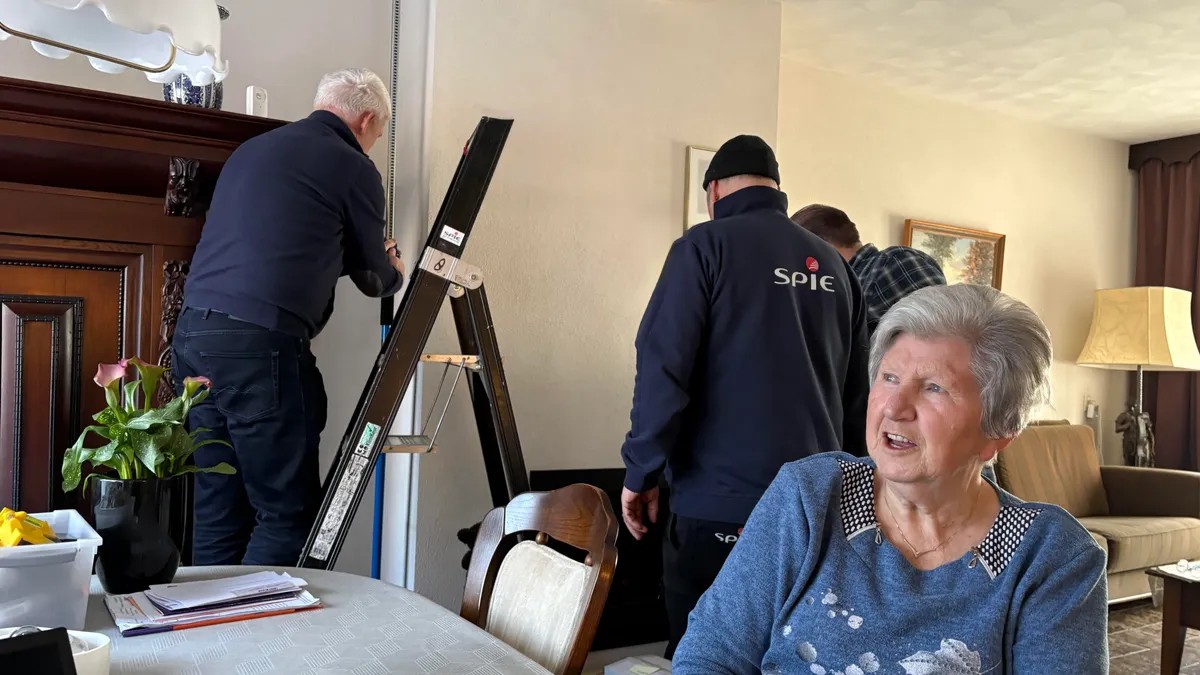
Waalre is testing AI watchers. Ten older adults live there now, under a digital gaze.
It’s a Dutch municipality trying to solve a grim math problem. Ceiling sensors from Kepler Vision scan the homes. They don’t see video in the traditional sense. They see motion. They feed an algorithm that decides if you fell or just sat down.
Then it tells someone.
Family gets the alert. Or emergency services. If you love tech, this looks like independence. If you hate being watched, it’s a nightmare.
“Depending on how you view surveillance, it’s either protection or dystopia.”
The demographic tide doesn’t care about your opinion. Statistics Netherlands says nearly a quarter of their people will be over 65 by 2040. The care infrastructure? It isn’t growing fast enough. This isn’t just a Dutch crisis. We are seeing it everywhere. Japan has 30% over-60s today. The US is heading toward similar numbers. The World Health Organization says the global over-60 crowd will almost double by 2050.
People will stay home. Longer. Alone. Without the old-school institutional backup.
This is bad news. Mostly because falling sucks.
Not just the fall itself. But lying on the floor after. Unnoticed. Hours turn to days. The chances of recovering drop fast. Speed matters. Finding you faster saves you.
That’s what this pilot hopes to do.
A trio of partners made it happen: WeConnect for the internet pipe, Leefsamen for care networks, and the Brainport region. It targets those already at high risk. The tech isn’t new, either. Kepler has been running it in nursing homes for years.
Moving it from a hospital bed to a living room isn’t a huge conceptual leap.
But it feels different. Weird.
An all-seeing eye in your house. It’s supposed to be safe, right? The system only looks for falls. That’s the claim. But physics doesn’t work like that. If a sensor can tell when you collapse, it also sees when you get up to pee at 3 AM. It notices if you walk slower than usual.
That data exists.
It might be suppressed. But it’s there.
What happens when this scales up? The companies involved want to grow. A 78-year-old just wants to not die on her linoleum floor. Did she really understand the consent form? What if the servers get breached?
These aren’t sci-fi questions. They are happening.
Kepler says the tech already monitors 15,000 elderly people around the clock in facilities. They promise security. They cite international standards. It feels reassuring.
Until it doesn’t. Data breaches happen. They always do.
Is the tech evil? No. Just messy.
Think about it. If you live alone, who are you really arguing with? The spy drone in the corner or the silence when you fall?
It’s not really a choice between privacy and surveillance.
It’s a choice between a camera and being discovered two days after you go down.
Viewed through that lens, the ceiling sensor stops looking like a big brother.
It looks a lot like a smoke alarm.