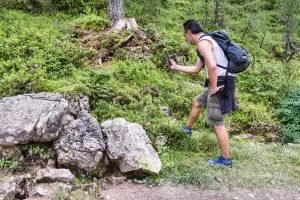
Summer is prime time for disconnecting. The lake, the woods, the bike path through the meadows. You are out there. You see something interesting. A flower you can’t name. A bird with odd plumage. What is it?
Decades ago, you carried a heavy book. You flipped pages. You guessed. It was frustrating.
Today, you use your phone. Snap a photo. Let the algorithm do the work.
This shift has changed how we interact with the wild. It is no longer about memorizing Latin names. It is about instant curiosity satisfaction. But not all apps are created equal. Some are better for flora. Some for fauna. Some are just social networks disguised as science tools.
Here is how to pick the right nature identification apps for your next trip.
The Power of AI Recognition
The core technology driving these tools is computer vision. You point your camera at a leaf, a bug, or a mushroom. The app scans millions of images in its database. It finds the match.
“You don’t need to be a biologist to identify a species anymore. You just need a decent camera and patience.”
This democratizes nature knowledge. You might not know why a beetle is red, but you will know it is likely a type of ladybug or soldier beetle.
However, accuracy varies. A blurry photo of a common oak tree is easy. A blurry photo of a specific moth? Good luck.
Top Contenders for Flora
If you are hiking and want to know what flowers are blooming, look at these tools.
iNaturalist is the heavyweight champion. It is not just an app. It is a community. You upload your photo. Scientists and experts confirm the ID. It builds a global map of biodiversity. It is free. It requires an account. The accuracy is high because of the human element.
Seek by iNaturalist is the lightweight sibling. No account needed. No social pressure. It gives you the answer instantly. It is fantastic for kids or quick checks. It does not save your data to the global database. Use it for fun. Use iNaturalist for science.
PictureThis is another strong option. It focuses heavily on plants. It can diagnose plant diseases. It offers care tips. It is more commercial. Some features are behind a paywall. The recognition speed is generally faster than iNaturalist’s community model.
Top Contenders for Fauna
Birds and bugs require different approaches.
Merlin Bird ID by the Cornell Lab of Ornithology is the gold standard. It uses sound as well as images. You can record a bird call. It will tell you what sang. You can take a photo. It will identify the species. It is free. It works offline. It is essential for any birder.
eBird pairs with Merlin. It logs your sightings. It helps track migration patterns. It is data-rich. It is complex. If you just want to know “what bird is that?”, use Merlin. If you want to contribute to science, use eBird.
For insects, iNaturalist remains the best bet. There are fewer dedicated, high-quality apps for bugs. The community expertise on iNaturalist fills the gap. You post a photo of a random
Measuring Trees and Identifying Forest Life
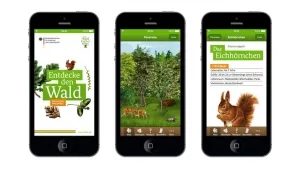
The federal ministry of agriculture isn’t just handing out leaflets anymore. They’ve released a dedicated app called the “Waldfibel” that actually serves a purpose. It’s free to download. The premise is simple enough: help you identify what’s growing and lurking in the woods. You get data on roe deer, jays, spruce, and pine. Even the more elusive mushrooms like chanterelles and ants are covered.
Beyond simple identification, the app throws in a quiz mode. There’s a tree game too. It turns forest education into something interactive rather than a lecture. You also get practical forestry facts and a nationwide map of German forests. That last part helps if you’re trying to figure out which patch of green belongs to whom.
But the standout feature is the height estimator. It’s surprisingly practical for anyone who has ever squinted at a tall pine and wondered how massive it really is. You don’t need a laser rangefinder if you have a smartphone. Here is how it works. You take a photo using the camera. Then you walk toward the trunk, counting your steps. The app takes those inputs and calculates an approximate height. It’s not precision engineering. It’s an estimate. But it beats guessing based on your own height.
This tool bridges the gap between casual hikers and serious botany enthusiasts. You don’t need to be an expert to use it. You just need to walk and look. The technology handles the math. The forest does the rest.
Is it accurate? Mostly. The step-counting method introduces some human error. But for a quick check? It works. You get immediate feedback on your screen. No complicated calibrations. Just snap and walk.
The app also includes a quiz. Test your knowledge on the fly. Did you know that a single oak can support thousands of species? The app tells you. It’s a pocket guide for the entire ecosystem. From the soil up to the canopy.
How Urban Nature Apps Like Naturblick Turn Cities Into Field Guides
Most city dwellers look at a tree and see only “green.” The “Naturblick” app from the Berlin Museum of Natural History is trying to change that lens. It was originally built for the capital but works just as well elsewhere. You aren’t locked into Berlin’s specific ecosystem, even though the app highlights interesting local spots on its map. The wildlife? Most of the species listed in its database don’t care about city borders. They live in suburban backyards and rural fields too.
The core logic is deceptively simple. Naturblick identifies species by asking you a series of targeted questions about their traits. Think of it as a digital dichotomous key. If you’re staring at a leaf, you answer what it looks like. If you’re looking at a bug, you answer how many legs it has. It strips away the jargon. You don’t need a botany degree to use it.
Photo ID and Audio Recognition
For plants—trees, herbs, flowers—the app goes a step further. You can snap a picture. The software analyzes the image to suggest an ID. It’s not perfect magic. Lighting matters. Angle matters. But it often gets you close enough to narrow down the possibilities.
Then there’s the audio. This is where the app gets interesting. Birds are everywhere in cities. Yet we rarely listen to them. Naturblick lets you record a bird’s call. The app matches the frequency and pattern against its library. Suddenly, that chipping sound isn’t just noise. It’s a specific sparrow or a blackbird. You start hearing the city differently.
Browsing Without Identification
You don’t have to identify anything to use the app. You can just browse. The database is structured for exploration. If you stumble across an unfamiliar plant on a walk, you can flip through its entries. It’s a digital encyclopedia that fits in your pocket. No data plan required for the basic browsing, though syncing might need connection.
The design prioritizes accessibility. It’s free. There’s no paywall for the core identification features. This matters. If you want people to engage with nature in urban spaces, the barrier to entry needs to be low. Cost is a huge barrier. So is complexity. Naturblick removes both.
Why It Works Beyond Berlin
Critics might argue that an app built for Berlin lacks the depth needed for other regions. That’s a fair concern. But the biological reality of plants and animals is regional, not strictly municipal. A dandelion grows in Berlin. It grows in London. It grows in Toronto. The app’s database leverages this overlap. You can use the same tree-identification logic in a completely different climate, provided the species overlap.
The map feature highlights “interesting places.” In Berlin, these might be specific parks or historical green zones. Elsewhere, the app’s utility shifts. It becomes a tool for your local park or even a vacant lot. The underlying knowledge remains valid. The interface might not highlight every obscure shrub in your backyard, but the identification engine does.
The Limitation of “Simple” Logic
It’s not without flaws. The question-based ID can be tedious. If you don’t know what a “lobed” leaf looks like, you’re stuck. You have to guess. Or look it up elsewhere. Then come
NABU Vogelwelt: Bestimmung, Extras und Naturschutz
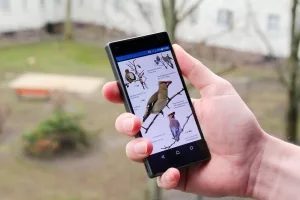
Wenn der Gesang im Wald oder im eigenen Garten nur als Rauschen ankommt, holt die gleichnamige App des Naturschutzbunds NABU Abhilfe. “Vogelwelt” ist hier der Oberbegriff für die digitale Beobachtungsstation. Sie deckt 308 Arten ab. Fotos, Beschreibungen und Verbreitungskarten stehen bereit. Die Basisfunktionen sind kostenlos. Das ist die Regel.
Die Bestimmungsfunktion arbeitet anders als reine Bilderkennung. Nutzer geben Merkmale des gesuchten Vogels manuell ein. Die App filtert die Möglichkeiten. Vorschläge zur Identität des Piepmatzes folgen. Das funktioniert auch ohne Kamera-Scan.
Premium-Features für tieferes Verständnis
Neben den freien Standardpaketen lockt die App mit Extras. Diese lassen sich als In-App-Käufe freischalten. Was kostet man da genau?
- Vogelstimmen zum Vergleich
- Bilder von Eiern der einzelnen Arten
- Videosequenzen, die typisches Verhalten in der natürlichen Umgebung zeigen
Warum gibt es diese_paid_ Inhalte? Der Ansatz ist transparent. Die Erlöse aus den Käufen finanzieren die kostenlose Bereitstellung der Basis-App. Ein Teil der Einnahmen fließt direkt in den Naturschutz. Das Geld kommt also wieder den Vögeln zugute. Es ist kein reines Geschäftsmodell ohne Rückfluss.
Wer tiefer einsteigen will, zahlt für den Kontext. Das Verhalten im Lebensraum ist oft schwerer zu erkennen als der Vogel selbst. Hier liefern die Videos die nötige Einordnung.
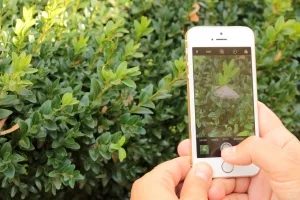
Why the NABU’s Insektenwelt app matters for citizen science
If you are trying to identify a dragonfly, a bee, or just that persistent fly buzzing near your window, there is a specific tool for that. The NABU (German Nature Conservation Union) has released an app called Insektenwelt. It is free. It is designed for the most common insects found in Germany and surrounding regions.
The app includes 122 species profiles. These are not just text walls. They include photos. There is also a photographic recognition function. You take a picture. The app tries to tell you what it is. It is not perfect. But it is a starting point.
The real utility lies elsewhere. The app connects directly to the “Insektensommer” (Insect Summer) campaign. This happens every year. The NABU asks the public to count insects. You can report your sightings directly through the app. This turns a casual observation into data. Scientists use this data. They track population trends. They see which species are disappearing.
“So lassen sich beobachtete Insekten direkt über die App melden.”
This means your backyard matters. It contributes to a larger picture. The app bridges the gap between curiosity and conservation. You do not need to be an entomologist. You just need to look. And record.
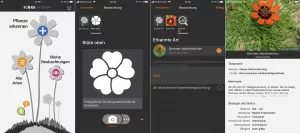
How Flora Incognita Identifies Over 4,800 Wild Species
The app is free, but the biology behind it is serious business. “Flora Incognita” isn’t just a hobby tool for casual gardeners. It is built for people who actually care about what they are walking past. Developed by the Technical University of Ilmenau and the Max Planck Institute for Biogeochemistry in Jena, the software bridges a gap that most smartphone apps leave wide open.
Most plant ID tools give you a vague guess. Flora Incognita gives you data.
The database covers more than 4,800 wild-growing species native to Central Europe. That is a massive number. For each species, the app provides a detailed profile. You get facts about appearance. You get the blooming period. You get toxicity levels. You get the conservation status. It is not just “it is a flower.” It is “it is a flower, it blooms in May, and it is poisonous if you eat it.”
Using Your Camera to ID Plants
The interface is simple. You do not need a botanical degree. You just need a smartphone camera.
Take a photo of a flower. Or a leaf. The app uses image recognition to analyze the visual data. It then cross-references that image against its internal database. The result is a list of potential species. It narrows down the possibilities based on the visual markers it detects.
The app translates visual cues into specific botanical data, from toxicity to protected status, for over 4,800 Central European species.
This matters because misidentification can be dangerous. Knowing if a plant is toxic separates a pleasant walk from a trip to the hospital. Knowing if a plant is protected helps you avoid damaging ecosystems you might not even realize you are standing in.
The technology behind this is not magic. It is machine learning trained on extensive datasets from the Max Planck Institute. The university developers handled the user interface and integration. The result is an accessible way to engage with local flora without carrying around a heavy field guide.
You point the camera. The app does the heavy lifting. The user gets the answer.
It is that straightforward.