Samuel F.B. Morse didn’t just invent a device; he invented a language for machines. Between 1832 and 1835, he developed the electric telegraph, a breakthrough that allowed messages to travel faster than any horse or ship ever could. But the hardware was only half the battle. You can’t send a complex thought with a simple click. You need a system.
That is where Alfred Vail came in. Alongside Morse, Vail helped invent what we now know as Morse Code in 1838. It wasn’t a random collection of beeps. It was a precise method for representing the alphabet, numbers, and punctuation marks using short signals (dots), long signals (dashes), and pauses (spaces).
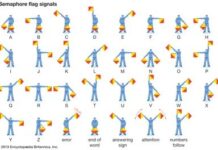
Think about that shift. Before this, communication was bound by geography and time. After this, it was bound by signal strength and operator skill. The code could be transmitted through telegraph machines that clicked across wires or even visually using flags or lights.
This wasn’t just about speed. It was about standardization. By assigning more common letters shorter codes like ‘E’ (a single dot) and rare letters longer ones like ‘Q’ (dash-dash-dot-dash), the system became efficient. Operators could type out complex messages with minimal effort.
Today, we don’t use telegraph wires to send emails. But the logic remains. Morse Code taught the world that information could be broken down into binary-like states: on and off. Short and long. Dot and dash. Every time you send a text, you are relying on a legacy of encoding that started with a man clicking a lever in the 1830s.
The codes are transmitted through either a telegraph machine or visual signals.
It seems simple enough. But the impact was massive. It connected continents. It changed news cycles. It turned communication from an event into a stream.
We still teach the basics of this system in scout troops and ham radio clubs. Not because we expect to send SOS signals from a desert island, but because it remains the purest form of digital communication. One state. Two states. Information.
Does it feel archaic? Maybe. But without that foundation, the internet as we know it wouldn’t exist. We are just using faster wires now. And slightly different codes.