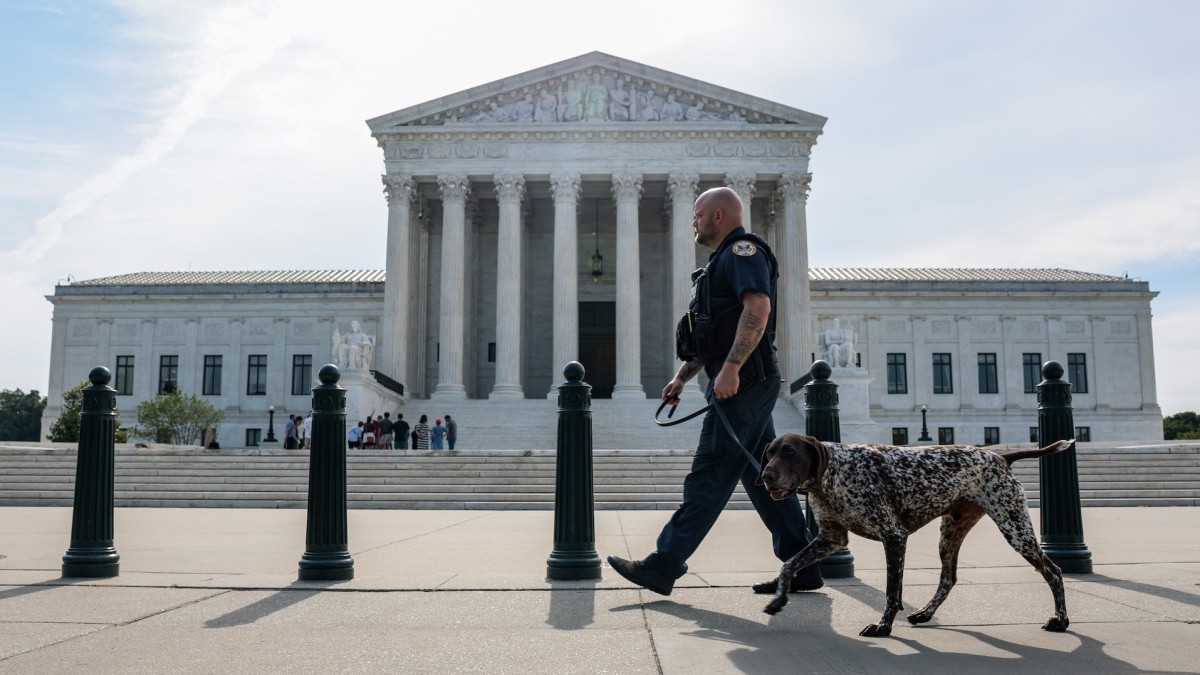
The Supreme Court said no to the FBI’s fishing expedition. 6-3. They drew a line in the digital sand.
Police can’t just sweep a neighborhood for phone location data anymore without a warrant. Even if it’s a crime scene. Even if it feels urgent. The high court called it “geofence” searches and decided they intrude too far into our privacy.
It wasn’t close, but it wasn’t unanimous. Justices Roberts, Kagan, Sotomayor Jackson, Kavanaugh and Gorsuch sided with privacy. The latter didn’t care for the reasoning but he agreed on the result. The dissenters thought this was too strict. They really did.
The case centers on Okello T. Chatriie. He got convicted of robbing a bank in Virginia back in 2019 sounds straightforward right? Not quite. The feds didn’t have a traditional clue. Instead they cast a net. A digital fence around the bank during the robbery time frame. Anyone whose phone pinged nearby? Suspect material. Chatrie popped up on that list.
His lawyers argued it was unconstitutional. An “overly broad set of data” violated the Fourth Amendment. The government pushed back. They claimed Chatrie had no reasonable expectation of privacy since he willingly shared data with Google and Apple. After all you used the app. You clicked accept on the terms of service. Case closed for the prosecutors.
An individual has a reasonable expectation of privacy… even though for only a limited, from a third-party.
Justice Elena Kagan wrote the majority opinion. She basically told the government to get a warrant. Phones track us constantly. Every few minutes. Most people don’t think about it but the trail is there. Password-protected or not that trail is private.
Google tried to beat them to the punch. Three years ago they switched gears storing location data on your phone rather than their servers. It was a workaround to avoid these exact legal headaches. If the data isn’t on the server it’s harder to subpoena. But the feds didn’t stop there. They went after Apple, Microsoft Snapchat and Uber too. The target isn’t just one company. It’s all of them.
Did you really consent to being tracked? Maybe you just wanted turn-by-turn directions.
The Court didn’t get bogged down in whether Chatriie’s specific warrant was bad enough. They sent it back to the appeals court. Let them sort that mess out. But the big principle stands. Your location data belongs to you. Not to the government. Not for a casual swipe.