Forget everything you think you know about foldable screens. The hinge is just the beginning.
Inside a restricted wing at Samsung Display’s headquarters in Seoul, away from the press tours and glossy launch events, sits the future of mobile hardware. It doesn’t look like the Galaxy Z series yet. It rolls. It slides. It unfolds in ways that make the current Galaxy Z TriFold look almost archaic.
I wasn’t allowed to touch the prototypes. They sat behind glass, mounted on mechanical rigs that stressed-tested them for endurance. Bending. Folding. Rolling. Repeatedly. But the visuals were enough to spark anxiety, or perhaps excitement, about where your pocket device is headed next week.
What Is the Samsung Flex S?
The star of the show isn’t a new phone on shelves yet. It’s a concept called the Flex S.
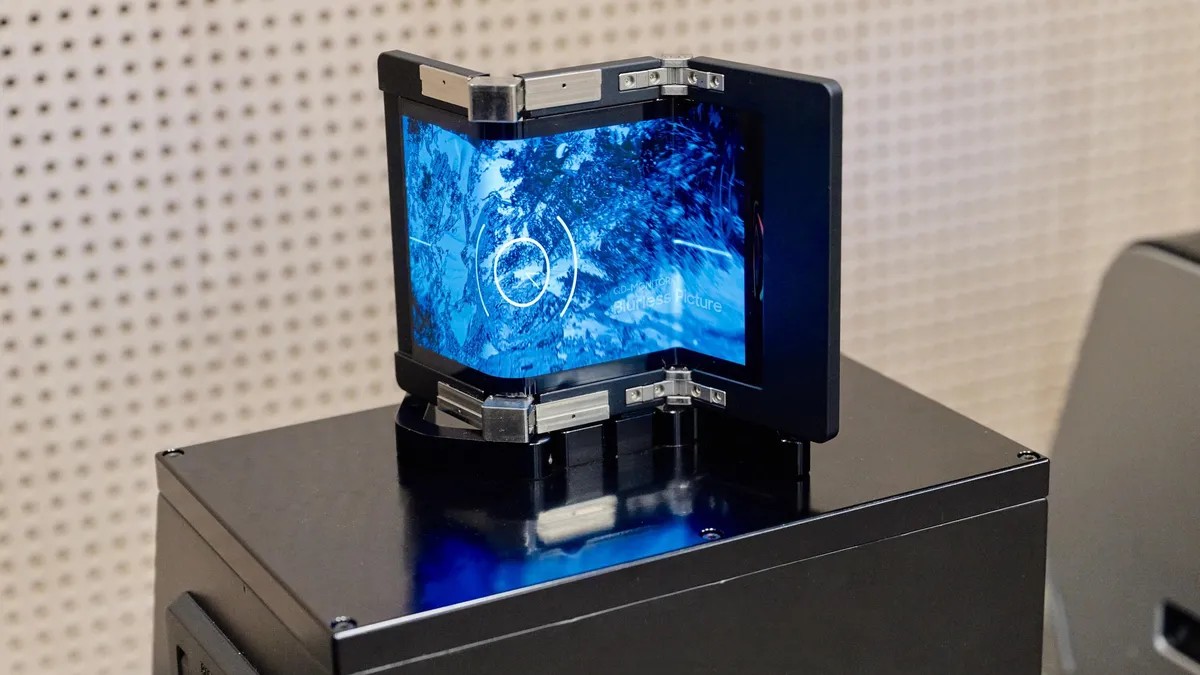
The name might confuse you if you’ve been tracking the recent Galaxy Z Flip 7 or the Galaxy Z Fold 7. This is different. The Samsung Flex S mechanism opens into a distinct Z-shape. It does not close into a neat pamphlet-like C-shape like the TriFold does.
Think tablet-sized. That is the goal.
“The Flex S opens to a size that rivals small tablets, ideal for streaming while keeping the bulk contained when closed.”
I recently reviewed the Galaxy Z TriFold while bedridden with strep throat. Having that extra screen real estate for Netflix was a lifesaver. The Samsung Flex S aims to capture that same utility but with a different geometric logic. If Samsung engineers this right, it could be the definitive device for binge-watching, minus the neck strain of holding a heavy slate.
Why Rollable Displays Are Making a Comeback
Then there is the Flex Slidable.
It rolls. Just like you remember from a brief, painful era of mobile tech rumors.
My immediate thought? LG is rolling in their grave.
Literally, in this case. LG teased a rollable smartphone back at CES 2021 before axing their mobile division entirely. Motorola followed suit with a concept that extended upward, and Lenovo showed off expanding laptop screens. It felt like a dead trend.
Samsung disagrees.
The Samsung rollable screen concept expands outward to create a wider canvas. Great for gaming. Terrible if your pocket is tight. This isn’t just a novelty; it solves a specific problem with current foldables: crease lines and internal hinge failure points. A rolling mechanism has no central fold. It has tension, yes, but no single point of catastrophic hinge wear.
Will it survive the lab? That is the question. But seeing the mechanism whir silently behind that glass made it feel less like vaporware and more like inevitable hardware evolution.
The Controversial Out-Fold Design
Not everything in that secret room made me happy.
Meet the Out Foldable.
If you have the current Galaxy Z Fold series, you know the big screen hides inside for protection. This concept does the opposite. It mimics the original 2019 Huawei Mate X approach. Both screens are on the outside. Unfold it, and you have a continuous, wrap-around display.
I hated it. Immediately.
Here is why: scratch resistance and user experience.
* You put this in your pocket? Dust and lint will embed into the screen edges.
* You set it down face up? Keys and coins will spiderweb the primary display.
* Who actually wants a touchscreen on the back of their phone?
It looks sleek. It feels futuristic. But practical daily use screams disaster. Still, Samsung builds these to test durability limits. Maybe they have figured out a way to armor the outside display we can’t yet comprehend. Until then, I am sticking to the safe side: inside folds only.
Merging Mechanics: The Flex Hybrid
Bored with single mechanics? Samsung tried to cheat by combining them.
The Flex Hybrid prototype can fold and roll.
Imagine a device that folds in half like a traditional book-style phone to stay pocketable. But once folded, the outer screen can unroll further for additional height.
This addresses the single biggest complaint about the Galaxy Z TriFold : bulk.
When folded shut, the TriFold feels thick. Like carrying a brick of glass. The Hybrid concept suggests you could get that expanded screen estate without adding a third panel. Roll out when you need to edit a spreadsheet. Tuck away when you want to make a call.
It is efficient. It is compact. And it likely requires a battery management system we haven’t invented yet.
Display Tech: Beyond the Fold
Mechanics are one thing. Visibility is another.
Two other prototypes sat nearby, and they changed my expectations for the next flagship, likely the Galaxy S27 series.
One display boasted a peak brightness of 5,000 nits.
For context, the Galaxy S24 Ultra (and the rumored S25/S26) hits around 2,500 to 2,600 nites in bright conditions. Doubling that isn’t a subtle upgrade. It means your phone is usable directly in midday desert sun. No squinting. No shade-seeking. It feels blindingly bright, but for outdoor visibility, it is a massive win.
Then there is the bezel killer.
Samsung placed a prototype phone on top of a larger tablet display. The result? A seamless image of cathedral stained glass.
Why? Because the bezels are 0.6mm thick.
Nearly invisible. From five feet away, the phone disappeared into the tablet screen.
The downside? You have nowhere to grip the device. Edge-to-edge touch screens invite accidental taps. I found myself instinctively reaching for sides that weren’t there. Immersive? Yes. Ergonomic? Debatable.
Are These Phones Actually Coming?
Look, this is Samsung Display, not the mobile division’s product roadmap.
Nothing guaranteed here. The Flex S, the rollables, the ultra-bright panels — they are proof of concept. They are engineering exercises to answer the question: Can we do this?
The answer seems to be yes.
But can you sell it?
Samsung’s Galaxy Unpacked event is weeks away. We know the Z Flip 7 and Fold 7 are coming. We are not seeing rollable screens or hybrid mechanisms in those announcements. This is R&D peeking out.
Yet, seeing the Samsung flex display concepts in action makes the current crop of foldables feel conservative. Safe. Boring, even.
If you are tired of hinges breaking and screens creasing, pay attention. The tech is already there, bending silently behind glass. Whether it ends up in your pocket or remains in Seoul is the real mystery.