
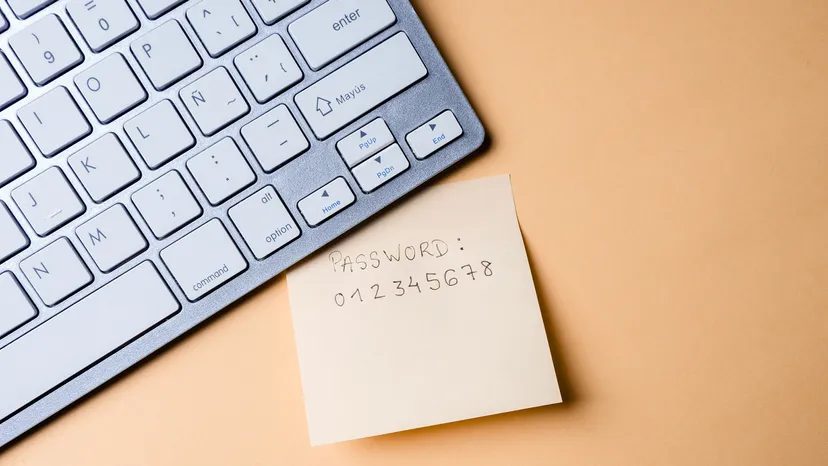
We are drowning in digital identities. Most of us manage dozens, sometimes hundreds, of online accounts. The sheer volume is exhausting. So, we take shortcuts. We pick easy-to-guess passwords because convenience wins over security every time. Or worse, we recycle the same weak string across multiple sites. This creates a massive vulnerability. If one site gets breached, everything else falls apart.
To understand the scale of this problem, we need to look at the data. Cybersecurity firm NordPass tracks these failures annually. They analyze data breaches across 44 countries. Their 2024 report highlights the most common passwords still in use. The list is predictable. And dangerous.
The Top 25 Weak Passwords
NordPass ranked these by frequency. Some of these were used over a million times in known breaches. Here is what is actually out there:
- 123456 – 1.2 million instances
- 123456789 – 693,000 instances
- 12345678 – 365,000 instances
- secret – 339,000 instances
- password – 196,000 instances
- qwerty123 – 144,000 instances
- qwerty1 – 138,000 instances
- 111111 – 106,000 instances
- 123123 – 102,000 instances
- 1234567890 – 93,000 instances
- qwerty – 92,000 instances
- 1234567 – 86,000 instances
- 11111111 – 80,000 instances
- abc123 – 58,000 instances
- iloveyou – 54,000 instances
- 123123123 – 51,000 instances
- 000000 – 46,000 instances
- 00000000 – 45,000 instances
- a123456 – 42,000 instances
- password1 – 41,000 instances
- 654321 – 41,000 instances
- qwer4321 – 36,000 instances
- 1q2w3e4r5t – 35,000 instances
- 123456a – 35,000 instances
- q1w2e3r4t5y6 – 34,000 instances
Keyboard Patterns Are a Hackers’ Best Friend
Look closely at the top entries. The pattern is obvious. Users are typing left-to-right, top-to-bottom. Or simply counting up. qwerty variants dominate. 123456 reigns supreme.
This is lazy. And it is fatal.
Hackers use automated scripts for brute-force attacks. These scripts try the most common passwords first. They do not guess Xy7!mP. They guess password1. They try these combinations in seconds. If you use a keyboard pattern, you are handing your keys to a script. It takes milliseconds to crack.
Personal Data and Common Nouns
The list also reveals what people consider “unique.” Names like ashley and michael appear in lowercase. Animals like monkey, dragon, and unicorn are still in rotation. Sports terms like baseball, football, and soccer round out the weak set.
Why do people do this? We think using our birthday or hometown adds security. It does not. Scammers can phish this info. Friends can guess it. Family members often know these details. Using identifying information makes you an easy target. It turns your personal history into a hacking cheat sheet.
How to Stop Being a Statistic
The lesson from the 2024 data is clear. Stop using sequential characters. Stop using keyboard rows. Stop using lowercase-only common words.
Strong passwords are not about being clever. They are about being random and long. Avoid any string that appears in your daily life. Avoid any pattern a machine can predict. If it appears in a list of common passwords, it is not a password. It is a confession.
If it’s in the top 25 list, it’s not a secret. It’s a public record.
The convenience of 123456 costs you everything. The effort of a complex, unique string costs you nothing but two seconds. Choose wisely. The rest of the story involves how to actually build something that sticks. But first, you have to admit that iloveyou is not a security strategy. It’s a cry for help.
And honestly? You deserve better than a number sequence to protect your life.
You probably already know that “Password123” is a bad idea. But simple complexity isn’t enough anymore. The real fix is randomness. Humans are terrible at generating random strings. We gravitate toward patterns. A computer does not.
Web browsers like Chrome can generate these ugly, unmemorable strings for you. They are effectively unhackable by brute force methods. The trade-off is memory. You cannot remember a forty-character string of symbols. So you have to store it.
The Two-Factor Necessity
For anything involving money or sensitive personal data, two-factor authentication (2FA) is non-negotiable. It adds a layer that a stolen password alone cannot bypass.
The second factor usually comes via a text, an email, or a dedicated app. A hacker might have your password. They also need your phone or access to your email inbox. This drastically reduces the attack surface.
Yes, it takes three seconds longer to log in. That is a small price to pay.
The Credential Stuffing Threat
Using one password across multiple accounts is the worst habit you can have. If one site gets breached, that password hits the dark web. Attackers then use scripts to try that same email-password combination on hundreds of other sites. This is credential stuffing.
It sounds tedious for the attacker. It works because people are lazy. If you use a unique password for every account, this specific attack vector has a success rate of zero.
Local-Only Password Managers
If you need unique, complex passwords, you need a manager. Most browsers have built-in ones. They are convenient. They auto-fill. They sync across devices.
But convenience has a cost. If you prioritize maximum security, avoid password managers that sync to the cloud. Cloud storage is a target. The most secure approach is a local-only manager. It stores data on your hard drive. No server. No internet connection.
Some hardware devices function like calculator-sized vaults. They keep your data offline.
There is one critical risk here. You need one master password. If you forget it, your data is gone. Forever.
Consider writing it down. Not on a sticky note on your monitor. On paper. Stored in a physical lockbox or a safe. Somewhere away from your computer.
The Ancient Roots of Encryption
This isn’t new. Humans have been hiding messages for millennia.
The earliest recorded example dates back to around 300 B.C.E. in India. The Arthashastra, an ancient Hindu text, details how soldiers and spies used coded messages. The goal was always the same. Avoid discovery. Keep the information safe from enemies.
We still do the same thing. The tools are just faster.