
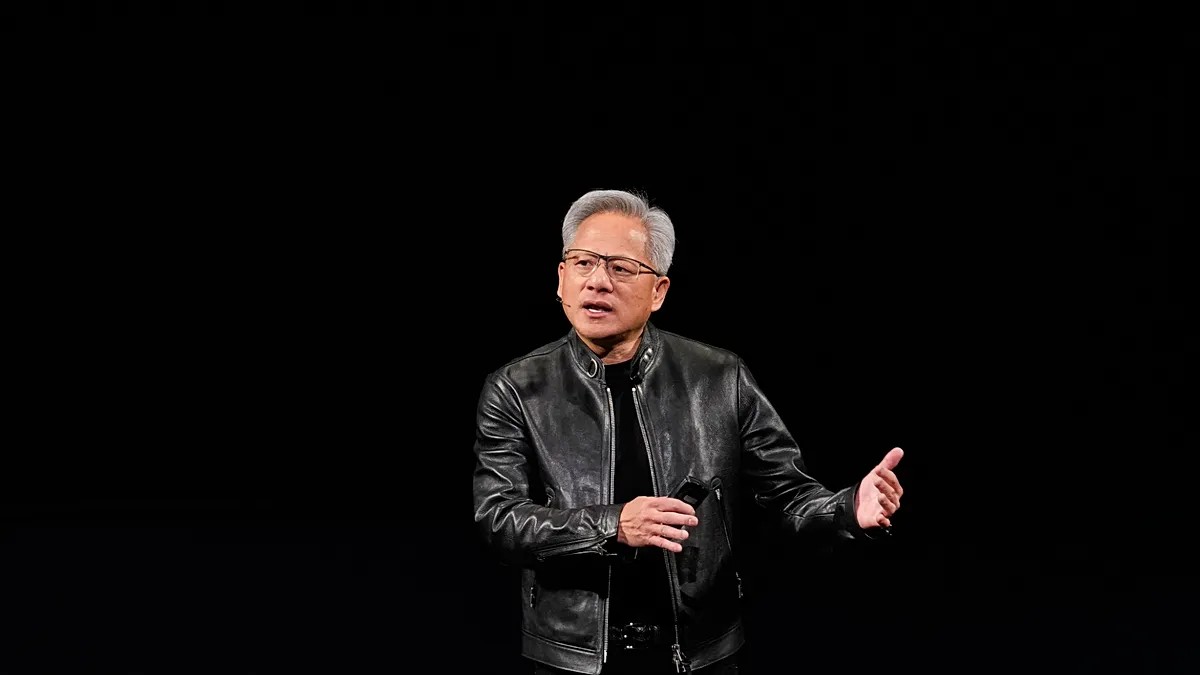
US President Donald Trump has made a significant, last-minute adjustment to his delegation for the upcoming summit with Chinese President Xi Jinping: Nvidia CEO Jensen Huang is now aboard Air Force One.
While the initial list of invited technology leaders circulated on Monday did not include Huang, reports indicate he was added after media coverage highlighted his absence. This sudden inclusion signals a strategic pivot in Washington’s approach to China’s artificial intelligence landscape, balancing diplomatic engagement with persistent export restrictions.
A Diplomatic Curveball
According to Reuters and CNBC, the decision to bring Huang along was reactive. After seeing reports that the Nvidia chief was not part of the official delegation, Trump reportedly called Huang directly to invite him. Trump later confirmed on Truth Social that Huang was on board, denying earlier narratives that he had been excluded.
“I will be asking President Xi, a Leader of extraordinary distinction, to ‘open up’ China so that these brilliant people can work their magic,” Trump posted.
An Nvidia spokesperson clarified the move, stating that Huang is attending “at the invitation of President Trump to support America and the administration’s goals.” This framing suggests the trip is less about commercial expansion for Nvidia and more about projecting US technological influence during high-stakes negotiations.
The High-Stakes AI Race
The timing of Huang’s inclusion is critical. For months, Nvidia has lobbied the US government to relax export controls that prohibit the sale of its most powerful AI chips—specifically the H200 series—to China. Despite these efforts, Nvidia confirmed in February that government-approved versions of these chips have not yet been cleared for entry into the Chinese market.
This restriction comes at a pivotal moment in the global AI race. While the United States maintains a dominant lead in capital, infrastructure, and high-end semiconductor manufacturing, China is rapidly closing the gap in other key areas.
According to the Stanford Institute for Human-Centered Artificial Intelligence’s annual report:
* China leads in the volume of AI patents, academic publications, and advancements in physical AI (robotics).
* The US retains the edge in foundational hardware and financial resources.
Can Trade Talks Break the Chip Logjam?
The summit, scheduled for Thursday and Friday, includes other major tech titans such as Tesla’s Elon Musk, Apple’s Tim Cook, and Qualcomm’s Cristiano Amon. However, experts remain skeptical that this gathering will result in an immediate breakthrough on semiconductor exports.
China is actively pursuing self-sufficiency to mitigate the impact of US sanctions. Tech giants like Huawei, Alibaba, and ByteDance have already launched their own chip design initiatives, reducing reliance on US hardware. As domestic capabilities grow, the leverage of US export controls may diminish over time, making diplomatic pressure a complex tool.
Conclusion
Jensen Huang’s presence on Air Force One underscores the delicate balance between US economic interests and national security concerns. While Trump aims to leverage America’s technological superiority to open Chinese markets, the rising independence of China’s AI sector suggests that a simple diplomatic solution to the chip war remains elusive.