This week defined a new tier in Middle East artificial intelligence infrastructure.
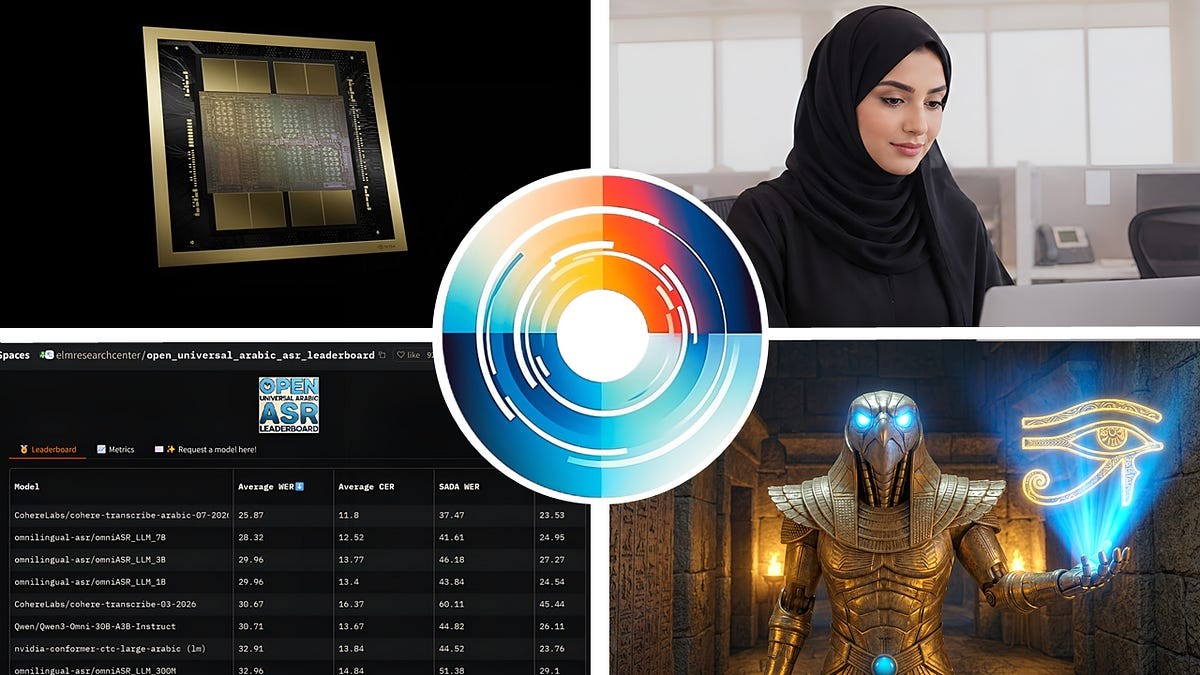
It started with a quiet but seismic administrative move in Washington. The US upgraded the United Arab Emirates’ status regarding advanced computing hardware. The result? G42 can now import next-gen AI chips. They don’t need individual export licenses anymore.
This isn’t just paperwork. It’s a signal. It marks the solidification of the strategic partnership between two nations. While that deal settled the hardware constraints, the rest of the region was busy with deployments. From Qatar’s ethical governance halls to Oman’s classrooms, AI stopped being theoretical and became operational.
The Infrastructure Unlock for UAE
The headline was the shift in export rules. By easing restrictions, Washington signaled trust in G42’s security protocols and the broader bilateral agreement. For the AI industry in Abu Dhabi, this removes the bottleneck of individual licensing reviews. It speeds up deployment. It allows rapid scaling of large language model infrastructure.
But hardware means nothing without application. The UAE is pouring that potential into workforce transformation. Microsoft deployed Copilot to 35 civil servants across 27 entities. That’s one of the largest sovereign AI rollouts in the region. It’s not just about installing software; it’s about integrating generative AI into government workflows.
Parallel efforts focused on the private sector. Emirates NBD and Techstars launched an accelerator. The goal? To force convergence between traditional banking and cutting-edge fintech. Founders get direct access to banking infrastructure to build AI-driven services. It’s a move to keep the regional financial sector ahead of global disruptions.
In healthcare, the pressure is on too. startAD published a health sector barometer after surveying 52 organizations. They also released two implementation playbooks. The intent is clear: accelerate adoption in a sector that has traditionally been slow to digitize.
Qatar as the Ethics Hub
While the UAE churned out models and rollouts, Qatar positioned itself as the moral compass for the region.
They launched the Global Alliance for AI Ethics at the United Nations. This is HBKU’s initiative. It’s trying to solve a problem that most tech companies ignore: cultural relevance. The alliance aims to create cross-cultural frameworks for governance. It’s about ensuring AI respects regional norms rather than imposing Western defaults.
It’s a softer power move. But in an industry fraught with bias, setting the ethical baseline is just as valuable as building the compute clusters. Deutsche Bank also entered the fray, opening a research hub in Doha. This supports their Global Hausbank strategy. They aren’t just looking at transactions; they are expanding long-term research presence. The message: Qatar is a hub for intellectual capital, not just capital.
The Arabic AI Breakthrough
For years, English-centric models have dominated the global AI space. That changed visibly this week.
Cohere stepped forward with two major announcements. First, they unveiled an open-source speech transcription model. It tops the Arabic Automatic Speech Recognition (ASR) leaderboard. It even outperformed Meta’s Whisper on specific Arabic metrics. That’s significant. High-fidelity transcription in a high-context dialect is notoriously difficult.
Then, Cohere partnered with HUMAIN. The objective is sovereign Arabic AI model development. They’re combining computational power (50MW of support) with deep local expertise. Why does this matter? Because proprietary models often fail in nuanced Arabic contexts. Sovereign models keep the data, the logic, and the nuance local.
Regional Rollouts in Education, Transport, and History
The momentum trickled down to specific sectors and neighboring countries.
Education
In a massive scale-up, the UAE trained 25,00 teachers in seven weeks. Alef Education handled the logistics across 710 schools. Teacher training is usually the weak link in AI adoption. This suggests the UAE is skipping the “awareness” phase and jumping straight to execution. If the teachers don’t get it, the students won’t. They’re trying to fix that bottleneck head-on.
Oman
The AI race is no longer exclusive to the major GCC economies. In the Al Dhahirah Governorate, ASUS and Intel opened an AI lab in Ibri. They’re targeting students and teachers. It’s grassroots. By bringing infrastructure like Intel chips and ASUS hardware to education, they are building a local talent pipeline for AI development, not just consumption.
Transport
Presight signed a deal with the Kazakh Ministry. The focus is a transport platform. It targets road safety, freight monitoring, and smarter logistics. It shows AI moving into heavy infrastructure. This is practical application. Fewer accidents. Better supply chain visibility.
History Meets Hype
TokenAI released Horus Hiero. A multimodal AI model. It reads 5,000 year-old Egyptian hieroglyphics. This feels like a parlor trick until you realize what it enables: mass digitization and translation of historical data. It’s AI as a time machine.
The Bigger Picture
This week highlights a divergence. The wealthy petro-states are securing hardware (G42) and deploying enterprise solutions (Microsoft, Emirates NBD). Others are focusing on the human element and cultural context (Qatar’s ethics, teacher training in UAE). Meanwhile, neighbors like Oman and Kazakhstan are building specific vertical applications (education, transport).
Is it enough to just have the chips? Probably not. The US gave the license, but the real value comes from who builds the models that use them. The push for sovereign Arabic AI suggests that localization is the next battleground. Once you can read your own language better than Google, and teach it to your own teachers, the geopolitical implications shift.
The hardware deal with America opens the door. What happens inside the room is up to the regions themselves. The scripts are being written in Arabic, taught by locals, and governed by new frameworks. It’s moving fast. And the rules keep changing.