
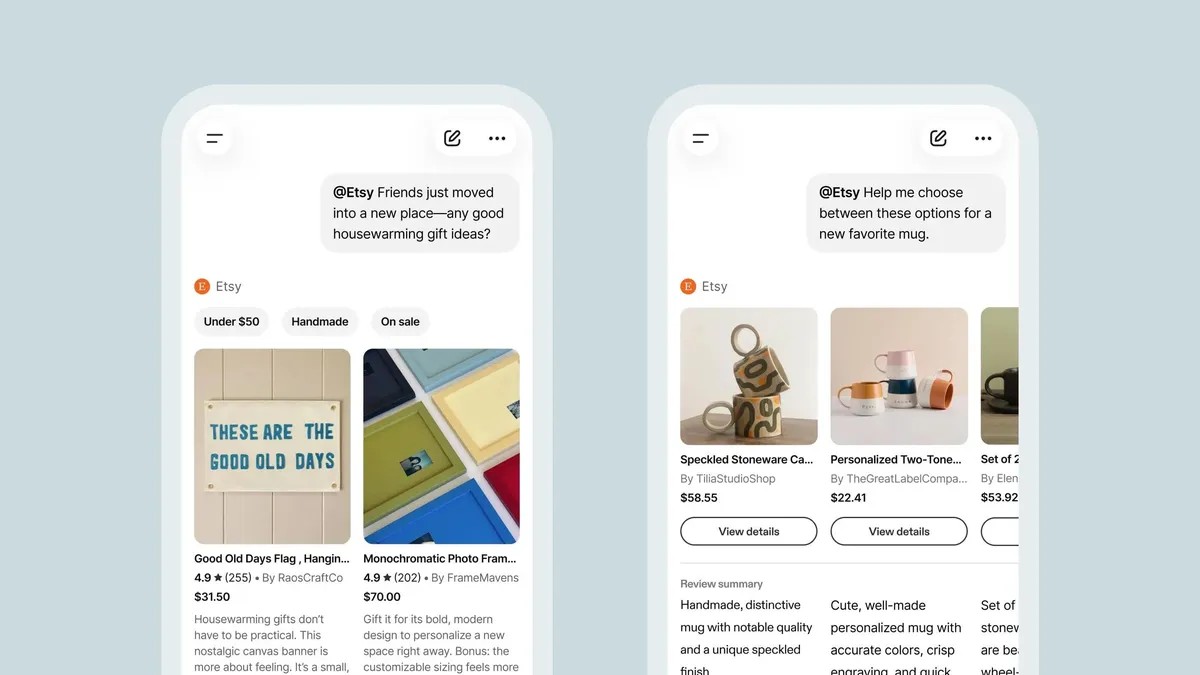
Etsy is making another move into the world of artificial intelligence, launching a beta version of its app within OpenAI’s ChatGPT. This initiative marks a strategic pivot for the handmade marketplace, which is seeking to integrate AI not just as a novelty, but as a core part of the shopping experience.
While this might seem like a simple feature update, it represents a significant shift in how Etsy views its relationship with technology. The company is less focused on immediate transaction volume and more on understanding conversational search behavior —essentially, learning how shoppers speak to AI when looking for unique items.
From Instant Checkout to Conversational Search
This is not Etsy’s first encounter with ChatGPT. In September of last year, Etsy was the inaugural partner for OpenAI’s “Instant Checkout” feature, which allowed users to purchase items directly within the AI interface. However, that experiment was short-lived. By March, reports indicated that both OpenAI and its retail partners, including Etsy, had scaled back the feature.
The reason was clear: referral traffic did not translate into significant sales volume. While the integration drove visibility, it failed to close the deal effectively for the marketplace.
Rather than abandoning AI, Etsy has returned with a different approach. The new beta app does not facilitate direct checkout within ChatGPT. Instead, it acts as a sophisticated search engine that directs users back to the Etsy website to complete their purchases.
How the New Integration Works
The new functionality is designed to bridge the gap between natural language queries and specific product listings. Here is how the current beta experience operates:
- Direct Interaction: Users tag
@Etsyin ChatGPT and provide a prompt (e.g., “Find a handmade birdhouse under $50”). - Curated Results: The AI responds with up to five listings, displaying key details such as price, seller rating, and shipping options.
- Dynamic Filtering: Users can refine results using buttons for categories like “handmade,” “personalized,” or budget constraints. Notably, these filters adjust based on the context of the prompt; for instance, a budget filter will scale up if the user’s initial query suggests a higher spending range.
- Contextual Advice: The AI provides additional context, such as warning users that some decorative birdhouses are not functional for actual nesting, or noting that shipping costs may push the total price above the stated limit.
Despite these conveniences, the experience is not a replacement for Etsy’s native website. The standalone Etsy platform offers far more granular filtering options, including material types, specific bird species, weatherproof features, and shipping origins. The ChatGPT integration serves as a discovery tool, not a comprehensive shopping destination.
The Strategic Goal: Building Etsy’s Own AI
Why launch a new AI partnership after the previous one failed to drive sales? The answer lies in Etsy’s long-term product strategy.
Rafe Colburn, Etsy’s Chief Product and Technology Officer, stated that the ChatGPT integration provides “earlier insight into the moments Etsy is relevant in a shopper’s journey.” In plain terms, Etsy is using OpenAI’s platform as a living laboratory. By observing how users interact with conversational search in real-time, Etsy is gathering data to build its own AI tools.
This focus is already evident in Etsy’s internal developments. The company is currently testing its own AI chatbot, dubbed the “Gifting Assistant,” which helps users find presents based on budget and occasion. The insights gained from the ChatGPT beta are likely being used to refine this proprietary tool, ensuring it meets user needs more effectively than previous attempts.
What This Means for the Future of Online Shopping
Etsy’s move highlights a broader trend in e-commerce: the shift from keyword search to conversational intent. Traditional search bars require users to know exactly what they want; AI assistants allow users to describe a need or a feeling, and let the algorithm interpret it.
However, the failure of the “Instant Checkout” model suggests that while consumers are willing to discover products via AI, they may still prefer to purchase them on trusted, familiar platforms. Etsy is acknowledging this by keeping the transaction on its own site while using AI to enhance the pre-purchase discovery phase.
The success of this new integration will depend less on immediate revenue and more on whether Etsy can successfully translate conversational data into a superior, native shopping experience.
Conclusion
Etsy’s return to ChatGPT is a calculated step toward mastering the next generation of search. By prioritizing data collection and user behavior analysis over direct sales, the company is laying the groundwork for its own AI-driven shopping tools. This strategy suggests that the future of e-commerce lies not in where the transaction happens, but in how well the platform understands the shopper’s intent before they ever click “buy.”