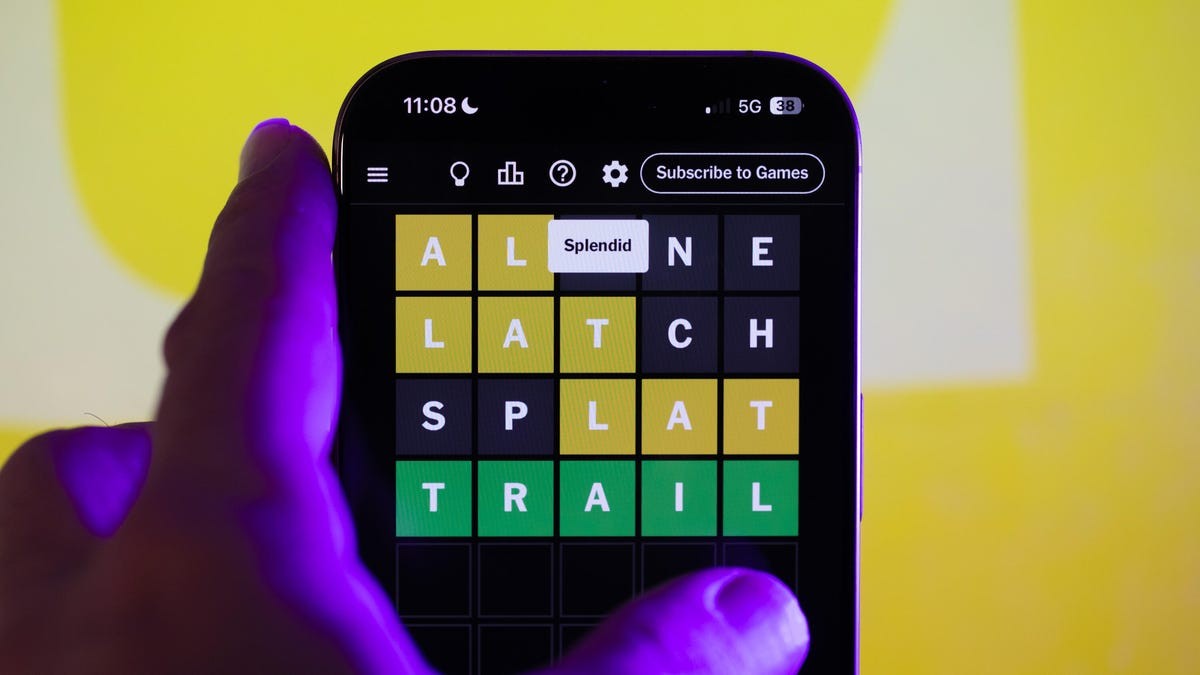
The viral success of Wordle in 2021 sparked a surge in daily word puzzles. While the New York Times now owns the original, plenty of alternatives exist for those seeking a fresh challenge. This guide explores ten games that build on Wordle ‘s core mechanics – guessing words based on color-coded feedback – or twist the formula in unexpected ways.
The New York Times Suite: Connections and Strands
The New York Times has expanded its puzzle offerings beyond Wordle. Connections tasks players with grouping four words into shared categories, with difficulty scaling from easy (yellow) to incredibly hard (purple). The game draws comparisons to the British quiz show Only Connect, suggesting a trend toward complex pattern recognition.
Meanwhile, Strands resembles a word search, but with a twist. Words can appear in any direction, including diagonally or in zigzags. The game requires players to find all letters within the grid, adding another layer of complexity.
Both Connections and Strands require a New York Times subscription (starting at $1/week). This paywall model is becoming common as puzzle games seek sustainable revenue streams.
Apple’s Exclusive: Quartiles
Quartiles is a new word game exclusive to Apple News Plus subscribers (starting at $13/month). Players manipulate letter tiles to form four-letter words, testing vocabulary and spatial reasoning. The exclusivity highlights a trend toward platform-specific puzzle experiences.
Wordle Spinoffs: Dordle, Quordle, Octordle, and Sedecordle
For those craving a steeper challenge, multiple Wordle variations exist. Dordle (two words), Quordle (four words), Octordle (eight words), and Sedecordle (sixteen words) force players to solve multiple puzzles simultaneously. These games demand intense focus and mental agility. They are free to play in any web browser.
Beyond the Clean: Lewdle
Lewdle is Wordle … with profanity. The game uses vulgar words, catering to a niche audience seeking an uncensored experience. While slurs are excluded, the game’s content is decidedly not family-friendly. It’s available in web browsers, and as an app on Apple and Google Play stores.
Antiwordle: The Reverse Challenge
Antiwordle flips the script. Instead of guessing the word, the goal is to avoid it. Letters turn gray (cannot be reused), yellow (must be included), or red (locked in place). The game’s difficulty stems from actively working against the core logic of Wordle. It is free to play in any web browser.
Absurdle: The Adversarial Puzzle
Absurdle is designed to resist being solved. The game actively changes the target word to prolong the puzzle, ensuring maximum frustration. Unlike Wordle, which provides subtle hints, Absurdle is intentionally unhelpful. It’s free to play in any web browser.
These games demonstrate that the core mechanic of color-coded word guessing can be adapted in countless ways, from casual challenges to sadistic puzzles. The proliferation of these titles suggests that daily word puzzles are here to stay.