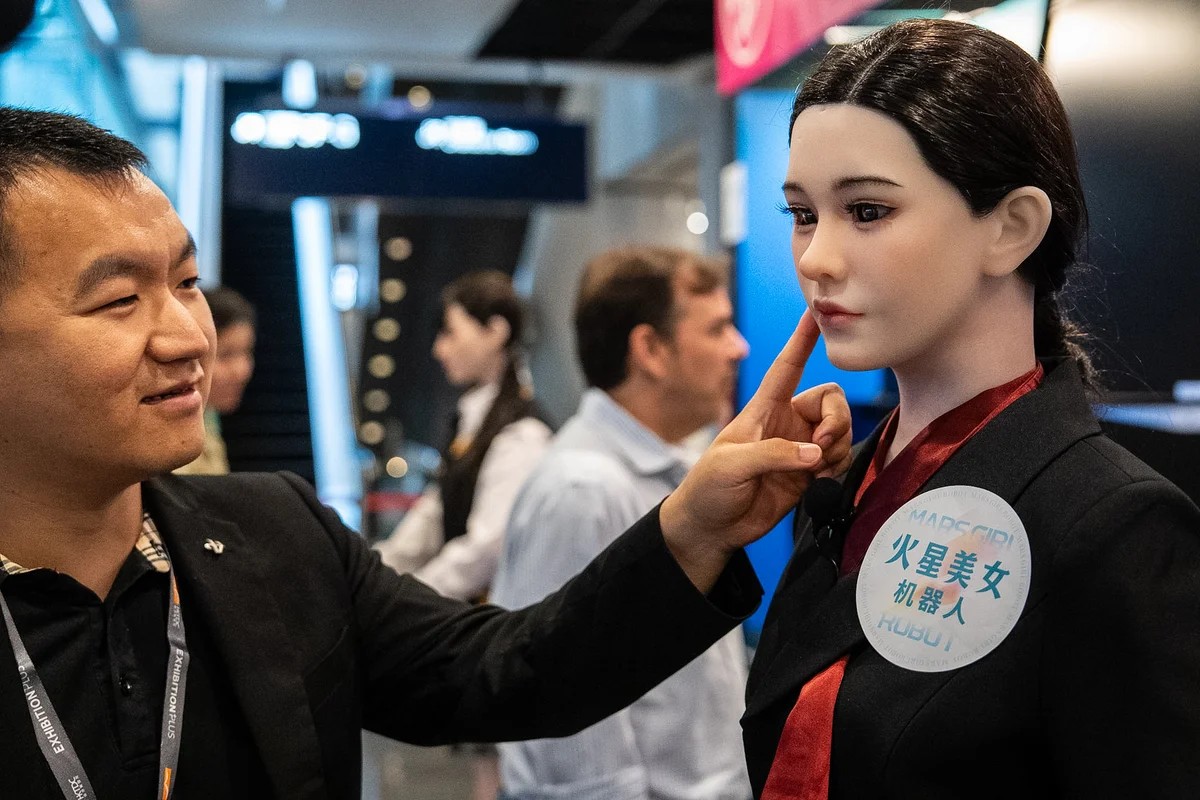
A recent robotics exhibition at the Hong Kong Convention and Exhibition Center has signaled a major shift in the robotics landscape. No longer confined to factory floors or specialized laboratory settings, humanoid robots are increasingly demonstrating capabilities that mimic human social interaction, physical agility, and even professional service roles.
The New Face of Human-Robot Interaction
At the heart of the exhibition were robots designed to bridge the gap between machine and human. One standout was the X2 Ultra from AGIBOT, a robot roughly the size of a primary school student. Beyond mere movement, the machine demonstrated sophisticated conversational abilities in both Mandarin and English, capable of identifying people in its vicinity—noting, for instance, a “woman holding a phone” or a “man holding a camera.”
The industry is moving toward a model of “embodied intelligence,” where robots are not just tools, but companions.
- Social Roles: Developers are programming robots to act as teachers for children and the elderly, or even as “friends” that provide emotional satisfaction through conversation.
- Customization: Companies are now able to program distinct personalities into different models, allowing for more nuanced social interactions.
- Human-like Aesthetics: Some manufacturers, such as Shenzhen DX Intech Technology, are producing robots with soft, synthetic faces and female features. These units are already being deployed in museums and government buildings to act as tour guides and receptionists.
Versatility in Motion: From Backflips to Security
The exhibition showcased a startling range of physical capabilities that move far beyond simple walking. The latest demonstrations included:
- Athleticism: Robots performing martial arts, backflips, and even catching objects.
- Artistic Expression: Machines capable of sand painting and synchronized dancing.
- Utility and Security: Demonstrations of robots performing security patrols and even “catching suspects” using nets.
This physical versatility highlights a transition from “static” automation to “dynamic” robotics, where machines can navigate and interact with the unpredictable physical world in much the same way humans do.
The Strategic Race: China’s Industrial Momentum
The rapid evolution of these machines is not merely a technological feat; it is a centerpiece of China’s national strategy. As part of its 2026–2030 development plan, Beijing has prioritized the “frontiers of science and technology,” viewing humanoid robotics as a critical sector for economic and national security.
The scale of this industry is immense. As of 2025, China boasts:
– Over 140 humanoid robot manufacturers.
– More than 330 different models in development.
According to research from Omdia, China is already producing high volumes of these machines. Three companies—AGIBOT, Unitree Robotics, and UBTech Robotics Corp. —have emerged as global leaders, each shipping over 1,000 general-purpose intelligent robots last year.
Competitive Advantages and Future Frontiers
Industry experts point to two specific factors driving China’s lead in this sector:
- Low-Cost Engineering: The ability to manufacture complex hardware at scale and at a lower cost than Western competitors.
- Collaborative Ecosystems: Unlike the highly secretive development cultures in the U.S. and Europe, Chinese firms tend to share technical know-how more openly, accelerating the overall pace of innovation.
Looking ahead, the goal is to close the “uncanny valley”—the gap between a machine’s appearance and a human’s sense of realism. Developers are working toward robots with facial expressions and movements so fluid they appear to “breathe,” aiming to create machines that can assist in decision-making and provide genuine emotional exchange.
“The next stage will be about warmth and emotion exchange… helping humans to make decisions and complete tasks.”
Conclusion
The transition of humanoid robots from novelty items to functional workers in service, education, and security marks a turning point in automation. As China aggressively scales production and refines social intelligence, the boundary between human assistance and robotic autonomy continues to blur.