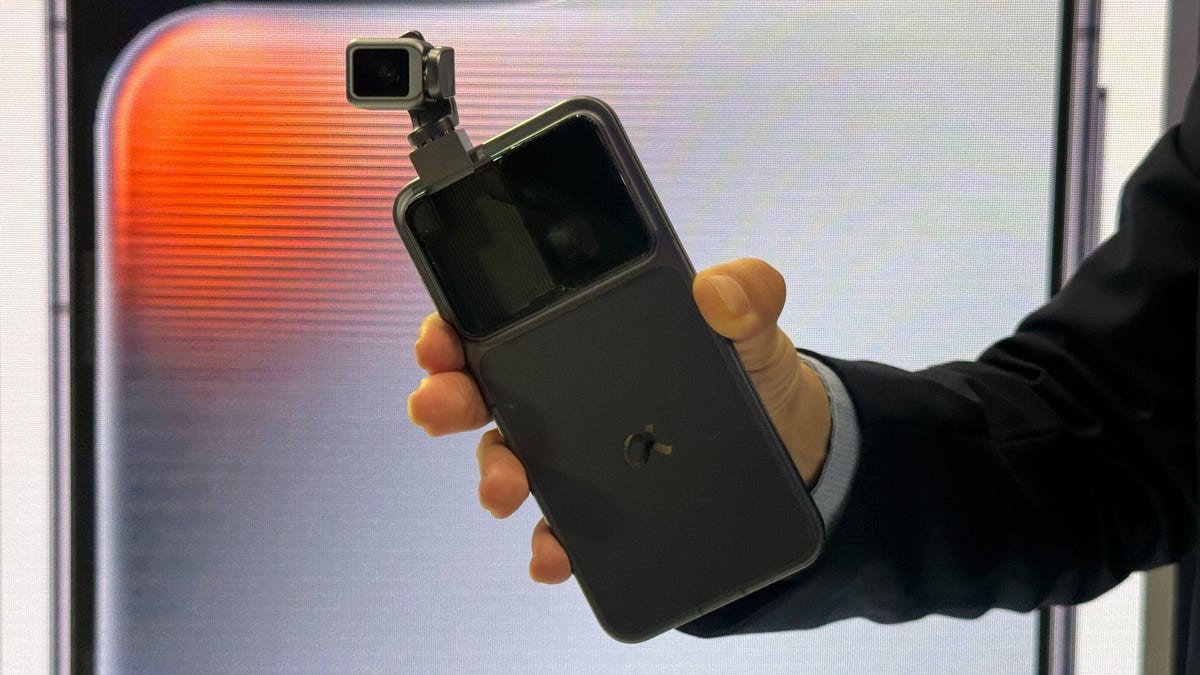
Honor, a Chinese tech company, has unveiled a smartphone unlike any other: one with a fully functional, built-in gimbal camera. This isn’t just an incremental upgrade in smartphone AI; it’s a fundamental shift in how phones are designed, prioritizing physical AI capabilities over traditional form factors.
The Robot Within
The device features a hidden robotic arm with a gimbal and camera, activated by simply presenting your palm to the front-facing camera. This arm can track subjects with AI-powered object recognition, even as the phone is moved. At the Mobile World Congress (MWC) show, the phone’s AI even provided unexpected feedback: it complimented a journalist’s hair and outfit, demonstrating its object-recognition capabilities in a playful manner.
Engineering Challenges
The development wasn’t straightforward. Honor faced skepticism and initial rejections from micro motor companies, who deemed the project unfeasible. The solution required extreme lightness and strength—the same challenges solved when designing foldable phone hinges. The micro motor now uses super steel and titanium alloy, making it 70% smaller than existing models. Despite tight space constraints, Honor claims the gimbal doesn’t compromise battery life, leveraging silicon-carbon battery technology from its foldable Magic V6 series.
Target Audience and Performance
The target market is clearly content creators who rely on tools like DJI Osmo Pocket stabilizers. Honor is confident its Robot Phone will match or exceed the quality of dedicated gimbals, citing a new partnership with professional camera company Arri. The device includes a 200-megapixel sensor, AI Spinshot (rotational movement for smooth transitions), and advanced stabilization.
Why This Matters
The Honor Robot Phone represents a turning point in mobile technology. For years, AI enhancements in smartphones have been software-driven. This device flips that trend, integrating physical AI into the phone’s hardware. It signifies a move toward phones that don’t just think but also act, reshaping how we interact with mobile technology.
The device is slated for release in the second half of the year. Whether it can truly compete with dedicated gimbal systems remains to be seen, but its existence alone marks a bold step forward in the evolution of smartphones.