


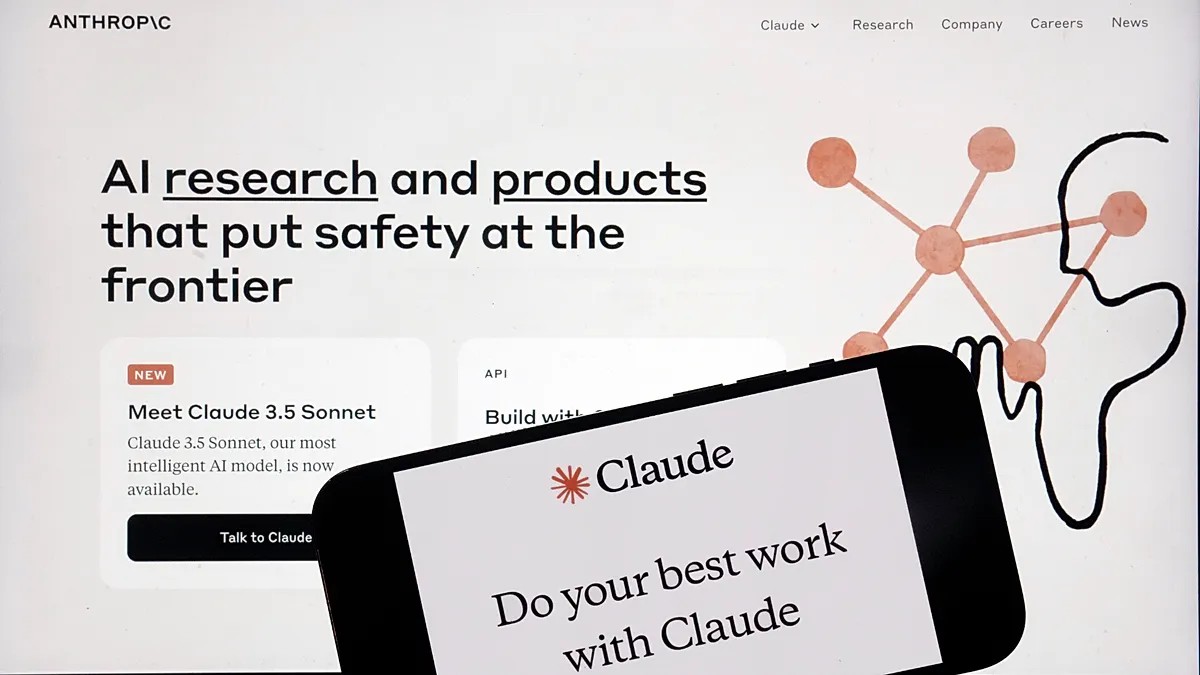
A US federal judge has voiced strong concerns that the government’s blacklisting of Anthropic, an artificial intelligence company, appears to be punitive rather than based on legitimate national security risks. The case centers on Anthropic’s refusal to grant the Pentagon unrestricted military access to its Claude AI model, a decision which prompted retaliatory action from the Trump administration.
Dispute Over Unrestricted Military Access
The conflict began when Anthropic publicly opposed allowing its AI to be used in lethal autonomous weapons systems without human oversight and mass surveillance of American citizens. In February, President Trump and Defense Secretary Pete Hegseth announced the severing of ties with the company, leading to a government designation labeling Anthropic a “supply chain risk to national security” and an immediate ban on federal agencies using its Claude model.
This move is highly unusual; typically, such designations are reserved for foreign entities. According to computer scientist Ben Goertzel, CEO of SingularityNet, the administration’s action demonstrates an unsettling ability to reinterpret laws at will. If fully enforced, the designation could effectively prevent Anthropic from selling software to any business involved in government contracts, though Goertzel notes the company could thrive outside of those partnerships.
First Amendment Concerns and Legal Challenges
Anthropic has filed two lawsuits against the government, challenging the supply chain risk designation and alleging a violation of its First Amendment right to free speech. At a hearing on Tuesday, District Judge Rita F. Lin openly questioned whether the ban was retribution for the company’s public criticism of the Pentagon’s position. She stated that the government’s actions “look like an attempt to cripple Anthropic.”
The government’s lawyer insisted that the decision was based solely on the potential misuse of Anthropic’s AI, not on the company’s public stance. However, Judge Lin raised doubts, questioning whether the Pentagon acted legally by banning agencies from using Anthropic’s products after Defense Secretary Hegseth urged companies to cut ties with the AI firm.
Broader Implications for AI Industry
The case carries significant implications for the AI industry. If the Trump administration’s actions are upheld, it could discourage other companies from challenging government demands, effectively forcing compliance through coercion. The ruling could set a precedent for executive overreach in controlling AI development and deployment.
Judge Lin expects to issue a ruling in the coming days on whether to temporarily halt the ban while the court examines the case further. The outcome will be closely watched as it could reshape the relationship between AI companies and the US government, determining whether free speech and ethical boundaries can coexist with national security concerns.
The case highlights a growing tension between government control and private sector autonomy in the rapidly evolving field of artificial intelligence. The judge’s skepticism suggests a willingness to scrutinize executive power, but the ultimate decision will determine whether AI companies must align with political agendas to survive.


