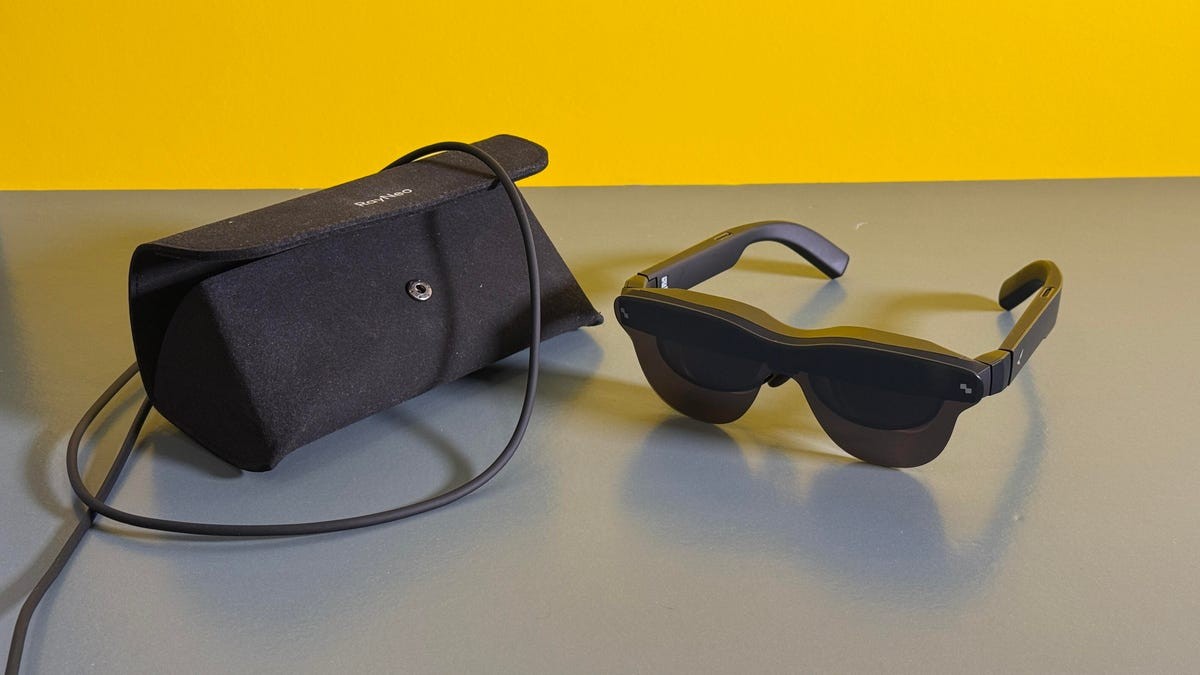
The market for wearable displays is evolving rapidly, moving from niche gadgets to increasingly polished consumer electronics. While they aren’t “smart glasses” in the way Meta’s Ray-Ban collection is—meaning they lack AI assistants and cameras—display glasses serve a specific, growing purpose: they act as portable, high-definition monitors that you wear on your face.
By plugging into any USB-C device, such as a smartphone, laptop, or gaming handheld like the Steam Deck, these glasses transform your surroundings into a private cinema or a massive workstation.
The Budget Contender: RayNeo Air 4 Pro
TCL has entered the fray with the RayNeo Air 4 Pro, positioned as a more affordable alternative to industry leaders like Xreal ($449+) and Viture ($399+). At a $299 price point, TCL is targeting users who want high-quality visuals without the premium markup of specialized augmented reality brands.
Visual Performance and HDR
The standout feature of the RayNeo Air 4 Pro is its display technology. Using a “birdbath” optical design—which reflects micro-OLED displays through prism-like lenses—the glasses offer a 1080p experience that punches above its weight.
- HDR Capability: Unlike many competitors, these glasses are HDR10-ready. This allows for better contrast between bright and dark areas, making them particularly effective for cinematic content where deep blacks and vibrant highlights matter.
- Specs at a Glance: The micro-OLED screen supports both 60Hz and 120Hz refresh rates, with a peak brightness of 1,200 nits.
- Color Customization: Users can toggle between modes like “film” and “eye comfort” to suit their environment.
Where the Savings Show: The Trade-offs
While the visual quality is impressive, the lower price tag comes with significant functional compromises compared to high-end models from Xreal or Viture.
1. Lack of “Spatial Anchoring”
One of the most critical features in premium display glasses is the ability to “pin” a screen in space. High-end models allow the virtual display to stay fixed in your room, even as you move your head. The RayNeo Air 4 Pro lacks this; the screen is “hard-glued” to your eyes, meaning wherever you look, the screen follows. This can make them feel less like a natural workstation and more like a rigid headset.
2. Audio and Environmental Control
- Sound Quality: While they feature Bang & Olufsen-powered speakers, they lack the volume and depth found in Xreal’s higher-end series. For a truly immersive experience, users will likely need to rely on earbuds.
- Light Management: Instead of advanced electrochromic lenses that auto-dim, the RayNeo relies on manual, sunglass-like overlays to block ambient light.
3. Limited Customization
The RayNeo lacks deep software controls to adjust the virtual size of the screen or the perceived depth of the display, limiting the user’s ability to tailor the experience to their specific comfort levels.
Verdict: High Fidelity vs. High Functionality
The RayNeo Air 4 Pro is a specialized tool. If your primary goal is to enjoy high-contrast, HDR-capable video on a budget, these glasses are a compelling choice. They prove that TCL can bring high-quality micro-OLED technology to a much wider audience.
However, for power users who want a seamless “virtual office” or a highly customizable immersive environment, the missing features—specifically spatial anchoring and advanced light control—make the more expensive competitors a better long-term investment.
Summary: The RayNeo Air 4 Pro offers impressive HDR visual quality for a budget-friendly price, but it sacrifices the advanced spatial tracking and environmental controls found in premium models.