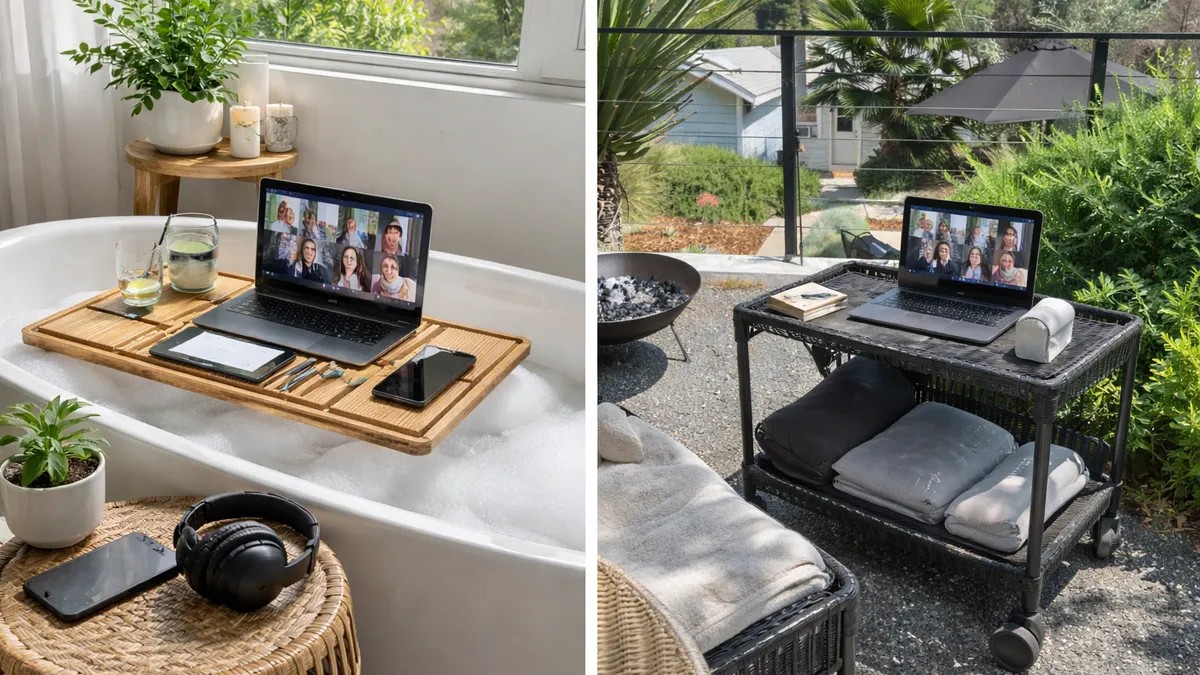
The debate over remote work has shifted from whether we should do it to how we can do it better. While many professionals settle for a standard desk and chair, the rise of flexible work has opened the door to “nomadic” home setups—utilizing unconventional spaces like backyards, living rooms, or even bathtubs to break the monotony of the traditional office.
To explore the limits of this flexibility, a recent experiment used various AI models—including ChatGPT, Claude, and Gemini —to design optimized workspaces for non-traditional environments. The results ranged from practical ergonomic advice to surprisingly witty suggestions for high-risk locations.
Designing for Mobility: From Backyards to Bathtubs
The primary goal of a mobile setup is to maintain productivity while moving through different environments. When prompted with images of various home locations, the AI tools provided distinct strategies for maintaining connectivity and professional presentation.
The Outdoor Office
For backyard setups, the AI focused on overcoming environmental hurdles like glare, temperature, and connectivity:
– Claude AI emphasized a “nomadic” approach, suggesting items like Wi-Fi extenders, external microphones, and even blankets for temperature control.
– ChatGPT offered aesthetic and practical advice, recommending a shade umbrella to prevent screen glare and suggesting that users sit near greenery to create a professional video background.
– Gemini leaned into ergonomics, suggesting an all-terrain rolling desk or a waterproof, adjustable folding laptop table to handle uneven outdoor surfaces.
The High-Risk Workspace
Perhaps the most unusual challenge was designing a setup for the bathtub. While highly unconventional, the AI treated the prompt with unexpected technical rigor:
– ChatGPT provided “survival” gear for the bathroom, including a silicone keyboard cover to protect against steam and a waterproof phone pouch to prevent accidental drops.
– It even offered professional etiquette advice, suggesting careful camera angling to avoid a “conference call in a soup” scenario.
Balancing Comfort and Ergonomics
One of the greatest challenges of remote work is the temptation to prioritize comfort over physical health. “Bed-working”—propping oneself up with pillows under the covers—is a common but physically taxing habit.
When asked to optimize “lazy” setups that maximize productivity without sacrificing comfort, Gemini provided a crucial piece of advice often overlooked in mobile setups: power management. It recommended a multiport hub and an extension cord, recognizing that a mobile setup is useless if the devices run out of battery mid-task. This highlights a recurring trend in AI assistance: while humans focus on the feeling of a space, AI often prioritizes the infrastructure required to keep that space functional.
Creating Privacy in High-Traffic Zones
For those working in shared living spaces, the challenge isn’t just comfort—it’s privacy and focus. Working in a central living area can lead to distractions and the accidental disclosure of confidential information.
To solve this, both Claude and Gemini suggested using design elements to create psychological and physical boundaries:
– Greenery as a Screen: Both models suggested using plants, which serve a dual purpose as productivity boosters and natural privacy dividers.
– Functional Dividers: Claude recommended using bookcases to create a dedicated zone, effectively partitioning the “office” from the “home” without the need for permanent construction.
Summary
By leveraging AI to brainstorm unconventional workspaces, professionals can find creative ways to balance mobility, comfort, and privacy. Whether through specialized hardware like waterproof tables or design choices like greenery dividers, the goal remains the same: turning any corner of the home into a functional, professional environment.