


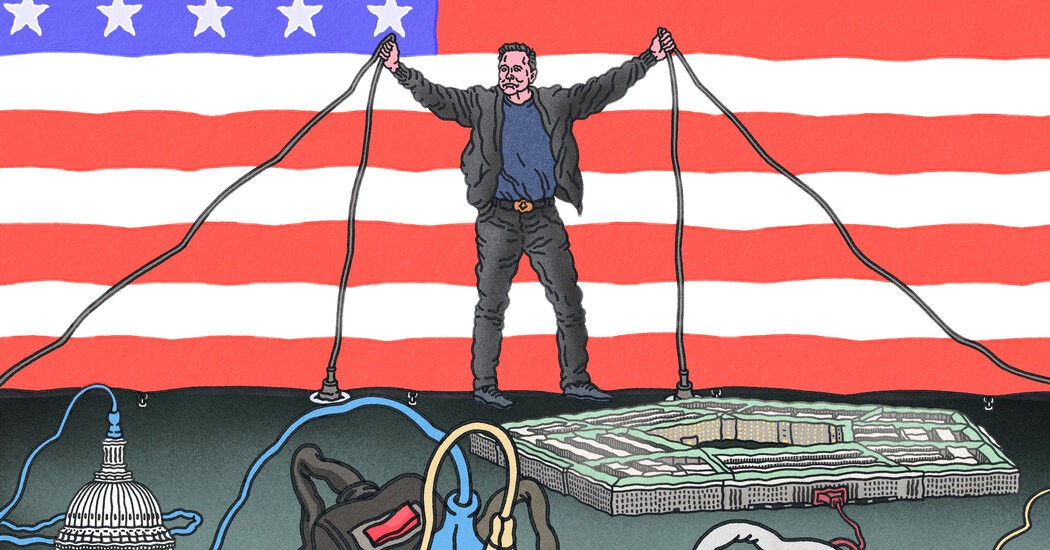
The influence of Elon Musk has rapidly evolved from tech entrepreneur to a significant figure in global politics and economics. Despite stepping back from some ventures, like the Department of Government Efficiency (DOGE) initiative, Musk remains the world’s richest individual, deeply embedded in U.S. government affairs and international dynamics. This shift prompts the question: is Musk simply a powerful businessman, or is he emblematic of deeper societal changes that are reshaping the future of politics and capital?
The Rise of “Muskism”
Authors Quinn Slobodian and Ben Tarnoff have coined the term “Muskism” to analyze these shifts, drawing parallels to historical concepts like “Fordism.” The core idea is that Musk’s business model necessitates a specific social contract, one that relies on radical automation and a restructuring of labor. Musk’s vision of a future dominated by robots and AI raises critical questions about the role of humans in a world increasingly driven by technology.
California Governor Gavin Newsom, in a recent statement, acknowledged Musk’s duality: labeling him both a modern-day Edison and “one of the great disappointments” of our time. This contradictory assessment highlights the tension between Musk’s innovative spirit and the potential consequences of his vision.
Electric Autonomy and Geopolitical Implications
One key aspect of “Muskism” is the concept of “electric autonomy”—the idea that renewable energy can enhance national self-reliance. Musk has actively positioned Tesla as a supplier of electric independence to various countries, including the United States, China, and the European Union.
As Slobodian and Tarnoff suggest, the current U.S. economic bet on AI makes these questions increasingly relevant. The implications extend beyond energy, influencing geopolitical strategies as nations seek to secure their own technological sovereignty. The ongoing tensions between the U.S. and Iran, for example, can be examined through the lens of Muskism: a world where technological dominance becomes a form of geopolitical power.
The Future of Labor and Society
Musk’s long-term vision—a future where both blue-collar and white-collar jobs are replaced by automation—demands a reckoning with the social contract. What happens to workers displaced by AI? How will wealth be distributed in a world where capital increasingly relies on machines rather than human labor? These questions aren’t merely economic; they are existential.
“Muskism” forces us to confront the uncomfortable truth that technological progress doesn’t automatically equate to societal improvement. Without careful consideration, it could exacerbate existing inequalities and create a future where the benefits of automation are concentrated in the hands of a few.
Musk’s influence is no longer confined to the business world. He has become a cultural and political force, and understanding “Muskism” is crucial for navigating the complex future he is actively building.


