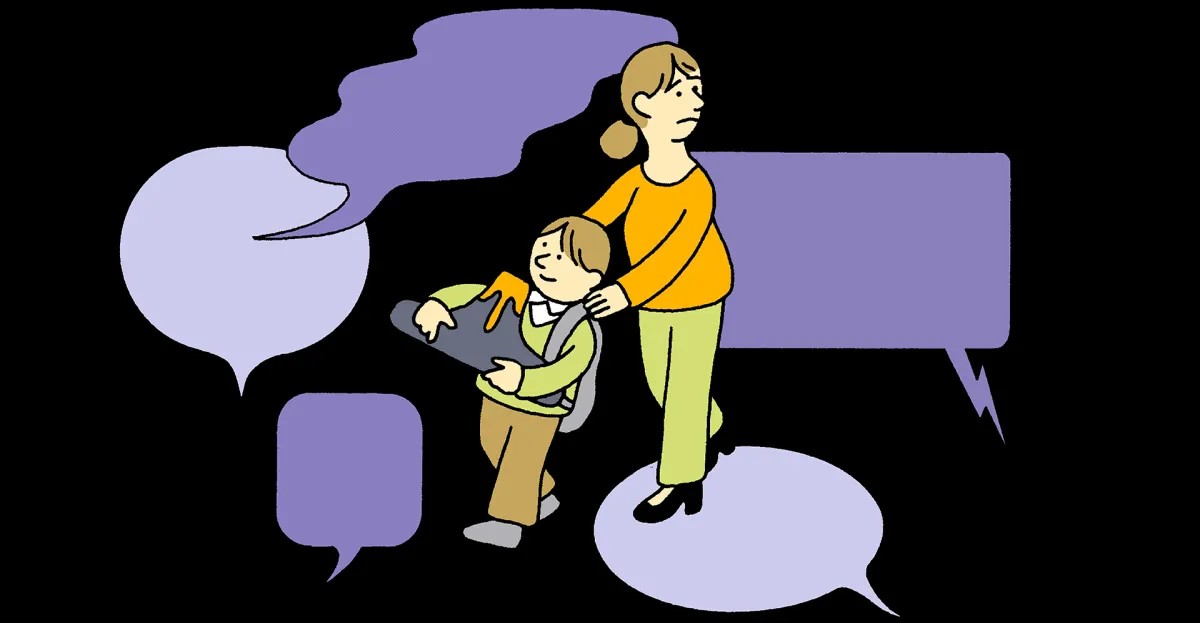
As artificial intelligence reshapes the global economy, parents are facing a new kind of “decision vertigo.” For decades, the roadmap to success was predictable: attend a good school, earn high grades, and secure a stable career. Today, that roadmap is fraying.
With AI capable of automating tasks once reserved for highly educated professionals, parents are left wondering: What skills will actually matter in 15 years? Does the choice between public and private school even matter if the labor market itself is being fundamentally rewritten?
The Limits of Individual Preparation
When faced with radical uncertainty, the instinct is to focus on the individual. We look for “future-proof” skills to give our children a competitive edge. Experts often suggest focusing on two specific areas:
- Soft Skills: Developing empathy, active listening, and accountability.
- Metacognitive Skills: Cultivating critical thinking, experimentation, and cognitive flexibility.
There is also a profound argument for a liberal arts education. In an age where AI can provide instant answers, the ability to exercise phronesis —or practical wisdom—becomes essential. This is the capacity to discern not just how to use a tool, but whether it is morally and logically appropriate to use it in a given context.
However, there is a hidden danger in the AI era: the loss of intellectual friction. Because AI makes tasks fast and easy, there is a risk of “intellectual deskilling.” If children rely on models to do their thinking, they may fail to build the “cognitive muscles” required to develop deep judgment and character.
The “Sunhat” Problem: Individual vs. Structural Change
While teaching a child to be resilient and thoughtful is valuable,, it may not be enough to protect them from the macro-economic shifts ahead. This is the “sunhat” problem: **Trying to protect a child from the systemic effects of AI by focusing solely on their individual skills is like trying to protect them from climate change by buying them a better sunhat..
As AI becomes a cheaper alternative to human labor,, we face a potential era of “gradual disempowerment.” Historically, democratic states have remained accountable to their citizens because the state relies on human labor for its economy and military. If AI provides that labor, the social contract may weaken, leaving citizens with less leverage to demand protections and rights.
Moving from “Hoarding” to “Solidarity”
To navigate this shift, we must change our fundamental approach to security. Many of us operate on a “hoarding model” —the belief that if we accumulate enough credentials, savings, and individual achievements, we will be safe. But as history and personal experience show, individual achievements offer little protection against systemic shocks or health crises.
A more robust strategy is the “solidarity model.” This involves moving away from atomized self-sufficiency and toward collective strength.
To truly prepare the next generation, parents should consider:
1. Civic Engagement: Teaching children to be effective advocates and informed citizens.
2. Structural Thinking: Encouraging them to ask why systems are changing, rather than just how to fit into them.
3. Collective Action: Participating in labor unions, advocacy groups, and political processes that demand accountability from tech companies and governments.
The challenges posed by AI are structural, not individual. While personal development is important, true security in a disrupted world will likely come from the strength of our communities and our ability to organize collectively.
Conclusion
Individual excellence is no longer a guaranteed shield against economic disruption. To ensure a stable future for the next generation, we must supplement personal education with active civic engagement and a commitment to collective social stability.