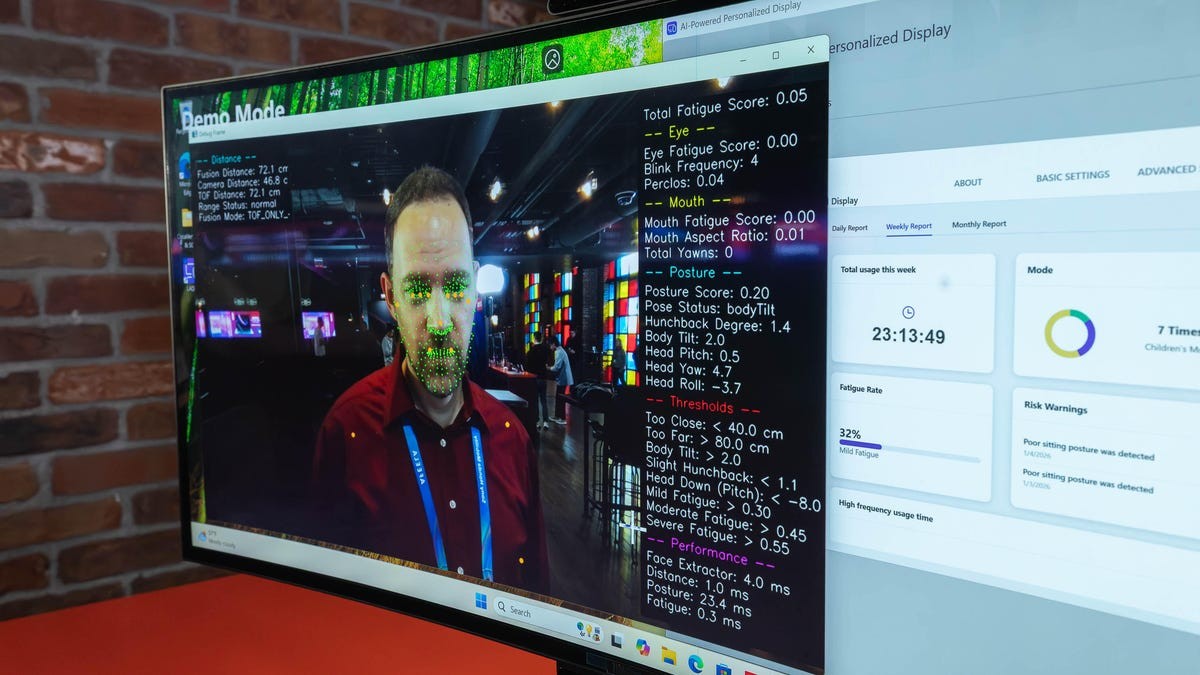
Lenovo showcased two intriguing display concepts at CES 2024: an AI-powered monitor that judges your well-being and a laptop with a rollable screen that expands on demand. Both prototypes signal a shift toward more proactive and adaptable computing experiences, though their future remains uncertain.
AI Monitor: Your Screen Knows When You’re Tired
The AI-Powered Personalized Display Concept uses a built-in camera to monitor your posture, blinking rate, and yawning frequency. If it detects unhealthy habits—like slouching or prolonged screen staring—it politely (but firmly) reminds you to take a break.
The system offers advice such as “Please be mindful of your posture to protect your spinal health” or “You seem a bit fatigued. Why not close your eyes for 20 seconds?” Beyond just nagging, the monitor dynamically adjusts blue light and brightness to reduce eye strain.
This matters because modern work culture often prioritizes output over well-being. The AI display isn’t just a gadget; it’s a potential intervention against burnout and repetitive strain injuries.
Rollable Laptop: More Screen When You Need It
Lenovo also demonstrated the ThinkPad Rollable XD Concept, a laptop with a vertically expanding screen. The 13.3-inch display can roll out to nearly 16 inches, adding roughly 50% more screen space. When finished, it retracts for compact portability.
The device builds on Lenovo’s existing rollable tech (like the ThinkBook Plus Gen 6 and X1 Fold). The rear cover even features a secondary, partial touchscreen using Gorilla Glass Victus 2, which displays widgets like your calendar or battery level.
This concept addresses a common user need: the desire for larger screens in smaller form factors. It’s a step beyond current foldable solutions, which often compromise durability or usability.
Whether these concepts will ever become consumer products remains to be seen. However, they point toward a future where devices adapt to us, rather than the other way around.
Both prototypes highlight Lenovo’s willingness to experiment with unconventional form factors and AI integration. While availability is unclear, they demonstrate the company’s vision for more personalized and adaptable computing experiences.