
The Trump administration is currently executing the most significant overhaul of international health aid in a generation. In an unexpected ideological twist, the administration’s “America First” approach has adopted a strategy long championed by progressive reformers: localization.
By dismantling the traditional USAID model and shifting funds away from Western non-governmental organizations (NGOs) toward direct bilateral deals with foreign governments, the White House is attempting to rewrite the rules of global health. However, this transition is proving to be a high-stakes gamble that balances potential systemic efficiency against immediate humanitarian crises and geopolitical exploitation.
From the “NGO Industrial Complex” to Direct Bilateralism
For decades, a primary criticism of USAID was its reliance on a massive network of Western-based nonprofits. Critics, including progressive activists and even some conservatives, argued that this created an “NGO industrial complex”—a system where a vast portion of aid money was consumed by Western overhead, high salaries, and administrative costs rather than reaching the ground.
Research suggests this inefficiency was real: channeling funds through local groups can be up to 32% more cost-effective than funding Western NGOs. Furthermore, the old model often created “parallel” healthcare systems that treated specific diseases (like HIV or malaria) but failed to strengthen the broader, national public health infrastructure.
The Trump administration has leaned into this critique with aggressive speed:
– The Shift: Moving away from funding international NGOs and toward “multiyear bilateral agreements” directly with recipient governments.
– The Goal: To empower local governments to manage their own health systems, theoretically making aid more sustainable and less reliant on Western intermediaries.
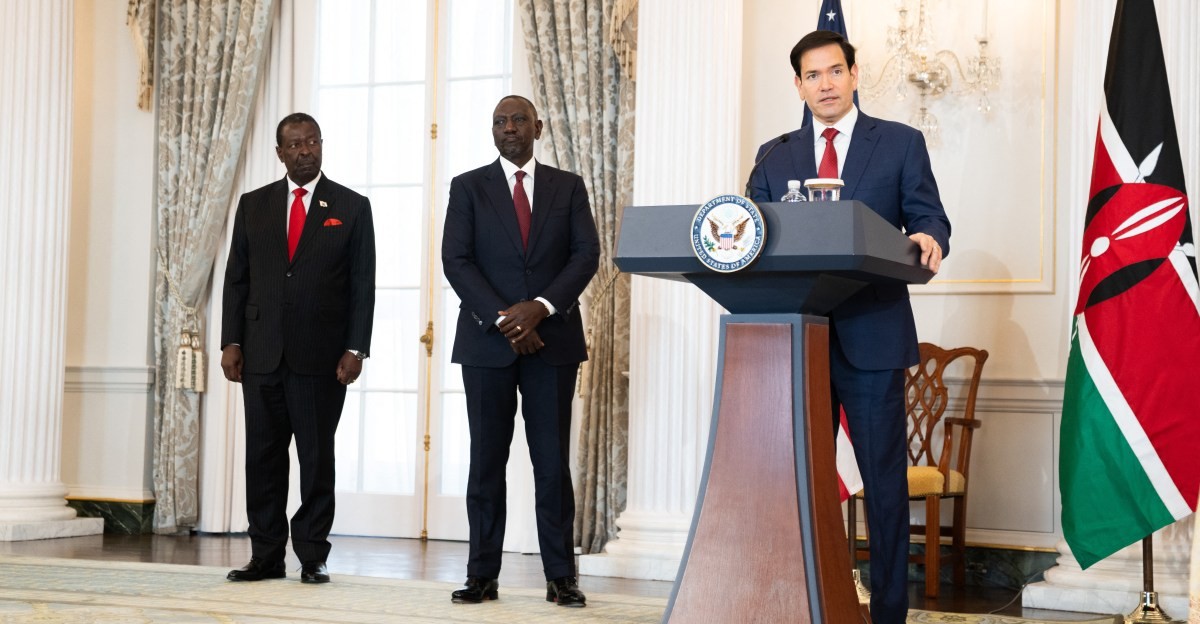
– The Scale: The US has already negotiated deals with 27 countries across Africa and Central America, including Kenya, Uganda, and Ethiopia.
The Human Cost of Rapid Transition
While the logic of localization is sound, the method of implementation has been criticized as reckless. The dismantling of USAID was not a gradual hand-off; it was a sudden disruption that has left millions vulnerable.
The consequences of this “shock therapy” approach have been immediate and devastating:
– Service Lapses: The abrupt withdrawal of funding has caused deadly gaps in the delivery of essential medications and services.
– Loss of Life: Reports indicate that hundreds of thousands of people have suffered or died from preventable diseases and hunger due to the sudden disruption of existing aid flows.
– Vulnerable Populations: Women and children, who rely most heavily on consistent, predictable health services, are bearing the brunt of these administrative shifts.
A New Tool for Geopolitical Leverage?
Perhaps most concerning to watchdog groups is that this new health strategy appears to be inextricably linked to US national security and economic interests. Critics argue that “America First” global health is less about altruism and more about a new form of transactional diplomacy.
Several troubling trends have emerged from these bilateral negotiations:
1. Data Sovereignty and Privacy
Many US deals require recipient nations to share sensitive health data and biological specimens with the US government. While ostensibly for outbreak detection, experts fear this could lead to “biopiracy,” where African nations provide the data that fuels medical innovations, only to be unable to afford the resulting treatments.
2. Economic Strings Attached
There are growing concerns that health aid is being used as a “cudgel” to extract resources. In some instances, the US has reportedly linked lifesaving aid to demands for access to a country’s mineral reserves or favorable economic terms.
3. Political Weaponization
The administration appears to be “picking winners and losers” based on political alignment. Countries that do not subscribe to the administration’s preferred ideologies risk being excluded from negotiations, effectively punishing them during public health crises.
Conclusion
The Trump administration has successfully identified a genuine flaw in the global aid architecture: the inefficiency and fragmentation caused by the Western NGO model. However, by replacing it with a system that prioritizes rapid disruption and geopolitical leverage, they have introduced profound new risks. The ultimate legacy of this shift depends on whether these bilateral deals foster genuine local empowerment or simply transform global health into a tool of American economic and political pressure.