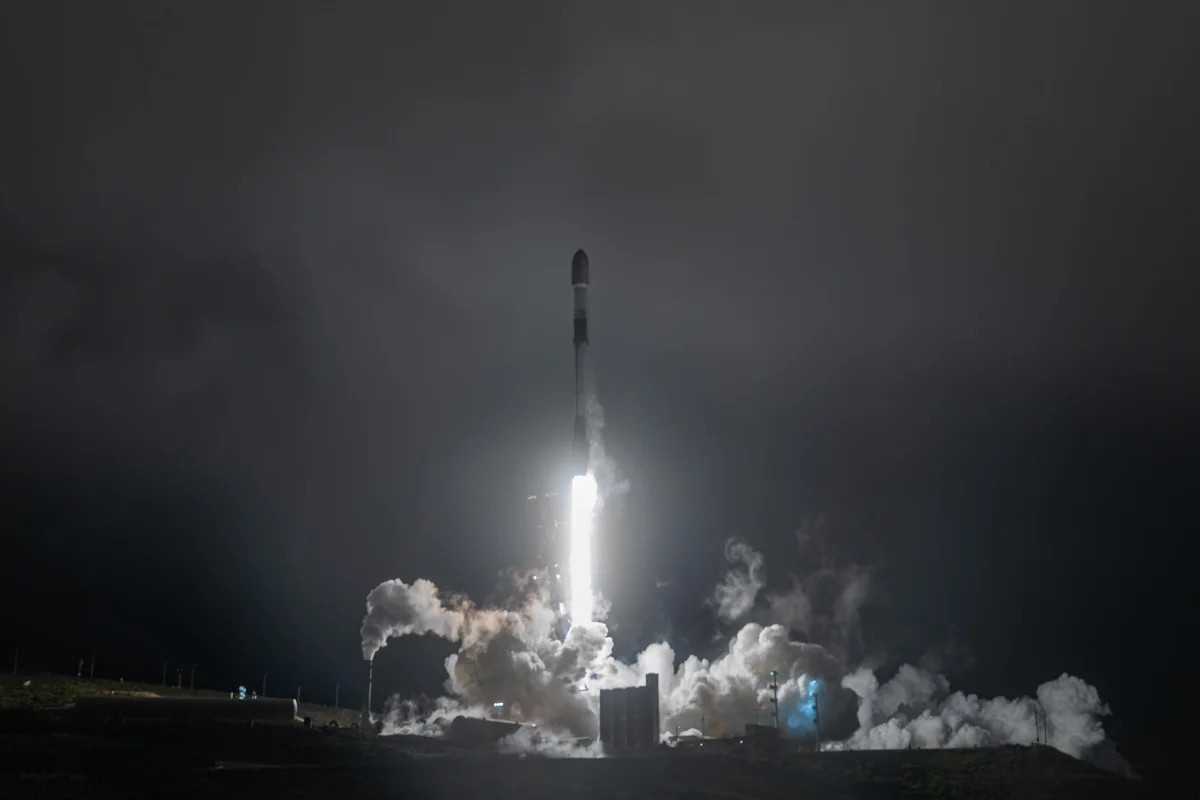
It finally happened. The first commercial satellite carrying nuclear fuel launched today.
No government contracts. No classified military secrets. Just pure commercial ambition riding on a Falcon 9 rocket off the coast of California. The Transporter-17 mission lifted from Vandenberg on Tuesday. A historic first. For sure.
The payload? The BOHR satellite. Built by City Labs in Miami. Their goal is simple. Prove that private companies can use nuclear power when solar panels and batteries just aren’t cutting it.
Think deep space. Think the dark side of the Moon, where the sun never reaches.
Peter Cabauy, City Labs’ CEO, called it a historic step.
“BOHR demonstrates that safe, compact nuclear power systems are ready for deployment.”
Always on operations. Unconstrained by daylight or battery degradation.
The tech isn’t magic, exactly. It converts beta particles from tritium decay into electricity. Simple physics. Complex application.
If this works, it shifts the paradigm. Nuclear power is usually reserved for NASA’s big bets. Remember Voyager? Those probes have been running on nuclear energy since 1977, still transmitting data from interstellar space.
Or the Mars rovers, Curiosity and Perseverer. They survive dust storms because they don’t need the sun. They just need atoms splitting.
BOHR brings that same reliability to the commercial market.
Was there risk? Of course. But SpaceX carried 80 other payloads up too. Standard rideshare fare.
“Rideshare missions significantly increase access to space,” SpaceX noted during the broadcast. They seem happy to facilitate it.
The big question remains. Can the private sector really master the regulatory minefield of launching radioactive material without incident?
BOHR is the first test. The rest is silence. For now. 🛰️