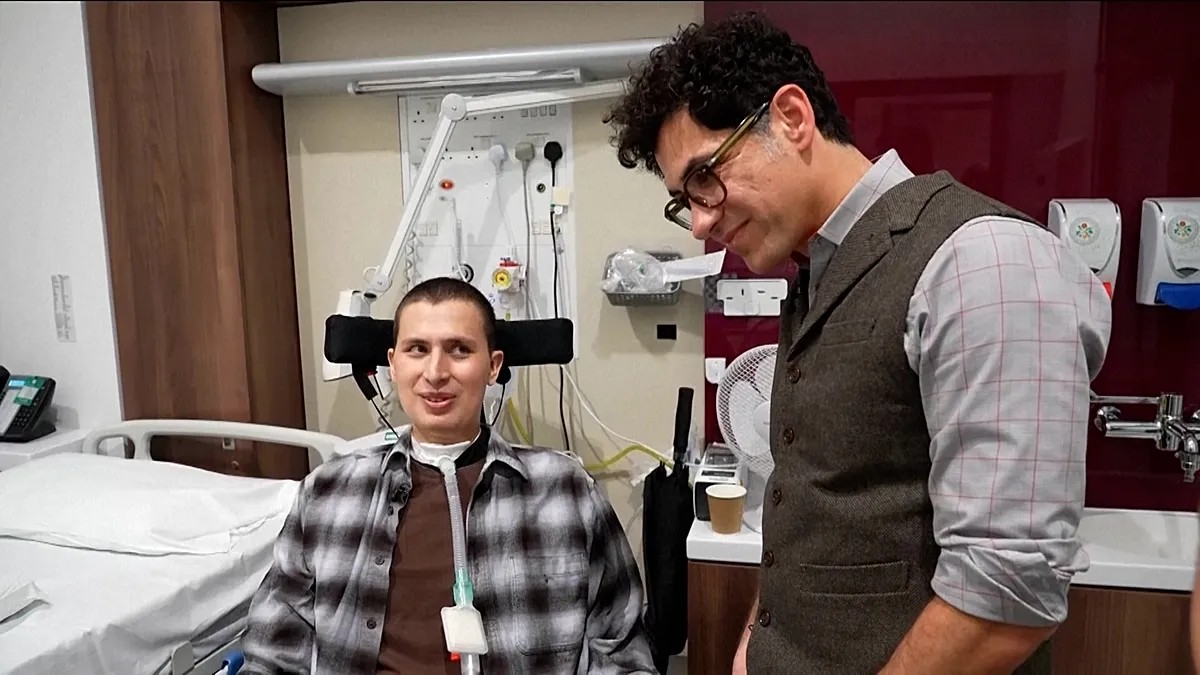
A British medical student, paralyzed after a diving accident, is demonstrating remarkable progress controlling a computer solely through thought, thanks to an experimental brain implant developed by Elon Musk’s Neuralink. The breakthrough, part of an early clinical trial at University College London Hospitals (UCLH), marks a significant step toward restoring independence for individuals with severe paralysis.
How the Technology Works
The device consists of microscopic threads implanted into the motor cortex—the brain region governing movement—via a surgical robot designed by Neuralink. These threads, thinner than a human hair, contain electrodes that detect neural signals associated with intended actions. The signals are then wirelessly transmitted to a computer, allowing the user to control a cursor, open files, and even play complex games like chess without physical input.
Sebastian Gomez-Peña, the patient involved in the UK trial, described the experience as “massive change… giving you any piece of hope,” when he realized he could control digital actions just by thinking about them.
The Procedure and Early Results
The implantation surgery took approximately five hours. The ultra-thin threads were inserted around four millimeters deep into Gomez-Peña’s brain, connecting to a coin-sized chip that sits flush with the skull. Early results show Gomez-Peña’s control is “fast and precise,” according to Dr. Harith Akram, the lead investigator for the UK trial.
Other participants in the global trial—including those in the US, Canada, and the UAE—have reportedly learned to type on virtual keyboards and operate devices using thought alone.
Why This Matters
This development is particularly crucial because severe neurological disabilities often leave patients with limited options for regaining independence. The Neuralink implant offers a direct pathway to circumventing physical limitations, potentially revolutionizing assistive technology. The technology has the potential to dramatically improve the quality of life for those living with paralysis, stroke, or other conditions affecting motor control.
What’s Next?
While the initial findings are promising, the technology has yet to be fully vetted through peer-reviewed publications or approved for widespread medical use. Larger, longer-term trials are necessary to assess the long-term safety, durability, and effectiveness of the implant before regulators can consider licensing it.
Despite these hurdles, the progress demonstrated by Gomez-Peña and other trial participants suggests a future where brain-computer interfaces could become a standard part of care for those with severe neurological disabilities.