Flash floods claim over 5,000 lives annually, making them one of the most lethal weather phenomena worldwide. Their unpredictability stems from their rapid onset and localized nature, which traditional weather monitoring systems struggle to capture. Now, Google is pioneering a novel solution: leveraging artificial intelligence and millions of news reports to forecast flash floods in real time.
The Problem with Traditional Forecasting
Conventional weather data often misses flash floods because they develop too quickly and over too small an area. While temperature and river flows are continuously tracked, these events are often too fleeting to be accurately measured. This data gap hinders the effectiveness of deep learning models, which excel at weather prediction but require comprehensive historical records.
Groundsource: Turning News into Actionable Data
To overcome this challenge, Google researchers used its Gemini large language model to analyze approximately 5 million news articles. This process extracted information about 2.6 million flood events, creating a geo-tagged time series dataset called “Groundsource.” This is the first time Google has applied language models to generate critical weather forecasting data. By mining reports from around the globe, Groundsource effectively fills gaps in conventional data, particularly in regions lacking advanced weather infrastructure.
How the Model Works
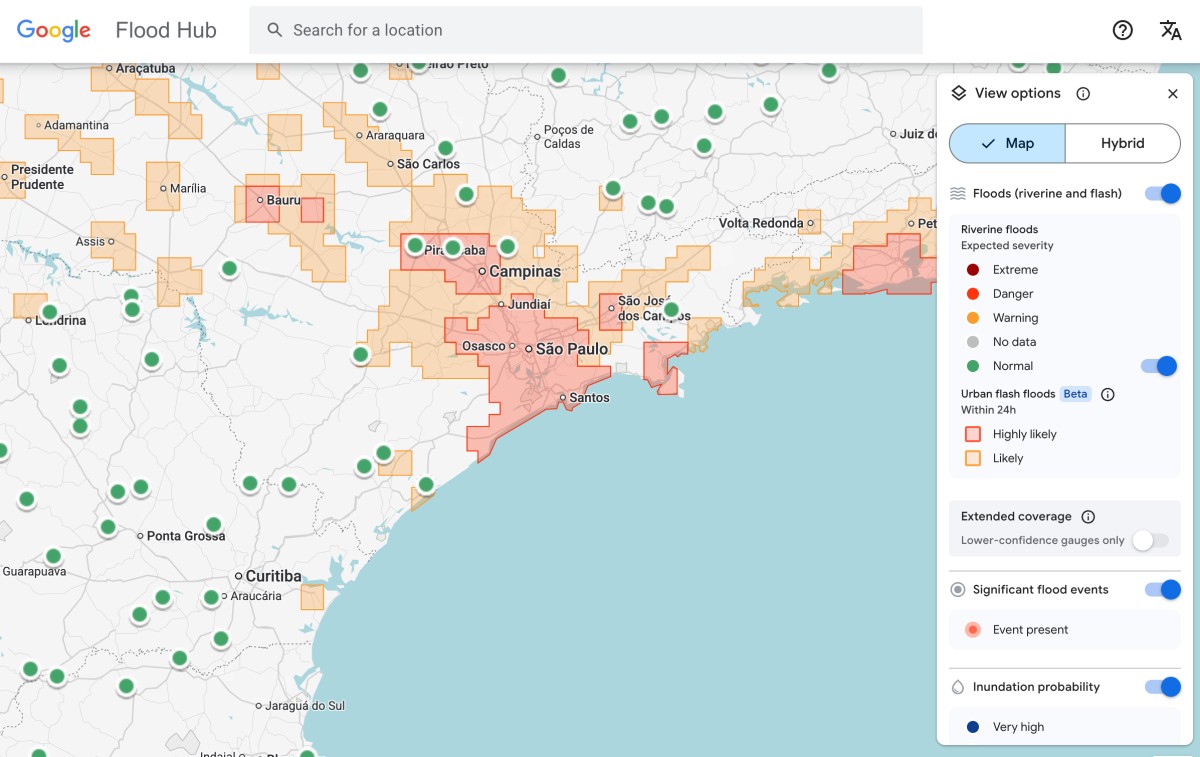
The Groundsource dataset was then used to train a Long Short-Term Memory (LSTM) neural network. This model ingests global weather forecasts and generates the probability of flash floods in specific areas. The result is a predictive tool deployed on Google’s Flood Hub platform, providing risk assessments for urban areas in 150 countries. The data is also being shared with emergency response agencies worldwide, improving their ability to react quickly to impending disasters.
Limitations and Broader Implications
While groundbreaking, the model isn’t without limitations. Its current resolution covers 20-square-kilometer areas, which is less precise than systems like the US National Weather Service that incorporate local radar data. However, the project’s true strength lies in its applicability to regions where governments lack the resources for expensive weather-sensing infrastructure.
“Because we’re aggregating millions of reports, the Groundsource data set actually helps rebalance the map. It enables us to extrapolate to other regions where there isn’t as much information.”
— Juliet Rothenberg, Program Manager at Google’s Resilience team
Google envisions extending this approach to other difficult-to-forecast phenomena like heat waves and mudslides. The success of Groundsource demonstrates the potential of large language models to transform qualitative data – news reports, eyewitness accounts – into quantitative insights that drive real-world action. The project highlights the growing trend of using AI to fill critical data gaps in geophysics, where scarcity remains a major obstacle to accurate modeling.
The initiative underscores a key point: in the age of information overload, the true value lies not in collecting more data, but in extracting meaning from what already exists.