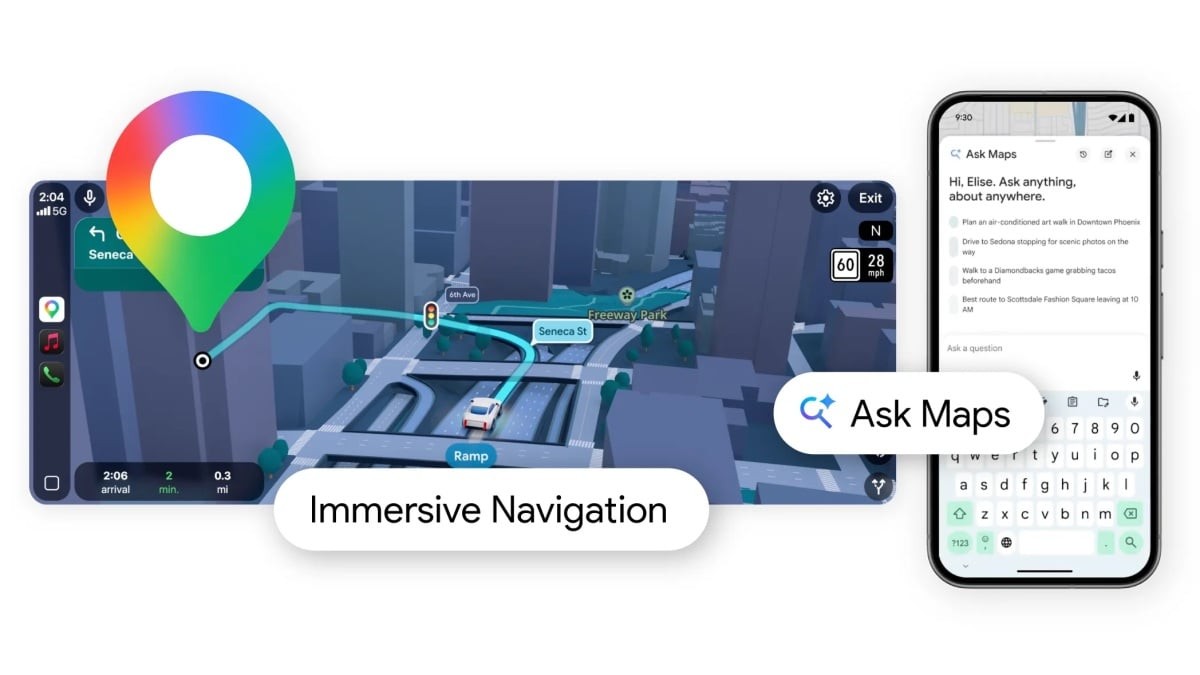
Google Maps has received its most substantial update in over a decade, introducing two major features: the AI-driven “Ask Maps” and a redesigned “Immersive Navigation” experience. These changes signal a shift toward more conversational and visually realistic map usage.
AI-Powered Conversational Search with ‘Ask Maps’
The most significant addition is “Ask Maps,” which integrates Google’s Gemini AI models into the app. This allows users to ask detailed, real-world questions in natural language – for example, “Where can I charge my phone quickly without waiting in line?” The system analyzes data from over 300 million places, leveraging reviews from a community of 500 million users to generate personalized recommendations.
This move is a direct response to the growing trend of AI-powered assistance in everyday tasks. By allowing users to interact with the map as they would a virtual assistant, Google aims to make the service more intuitive and efficient.
Ask Maps also learns user preferences and can suggest nearby attractions based on planned itineraries. The feature can also assist with reservations, saving locations, and sharing destinations with others.
Immersive 3D Navigation Redesign
Alongside AI, Google Maps is introducing “Immersive Navigation,” a complete visual overhaul of the driving experience. This feature provides a detailed 3D rendering of the environment, highlighting road markings, traffic signals, and surrounding buildings with realistic accuracy.
This redesign isn’t just aesthetic: it’s about clarity. The detailed 3D view aims to reduce cognitive load for drivers by clearly presenting critical road information.
Additional Updates and Rollout Details
Beyond the headline features, Google Maps is also implementing:
- More advanced route notices and real-time disruption alerts.
- Natural, conversational voice guidance.
- Parking recommendations near destinations.
- Improved context when choosing between routes.
Ask Maps is now available in the U.S. on both iOS and Android, with a desktop version planned for later this year. Immersive Navigation is also launching in the U.S. and will expand to CarPlay, Android Auto, and Google-built vehicles over the next few months.
These updates collectively position Google Maps as more than just a navigation tool; it’s becoming an AI-powered assistant for real-world exploration.