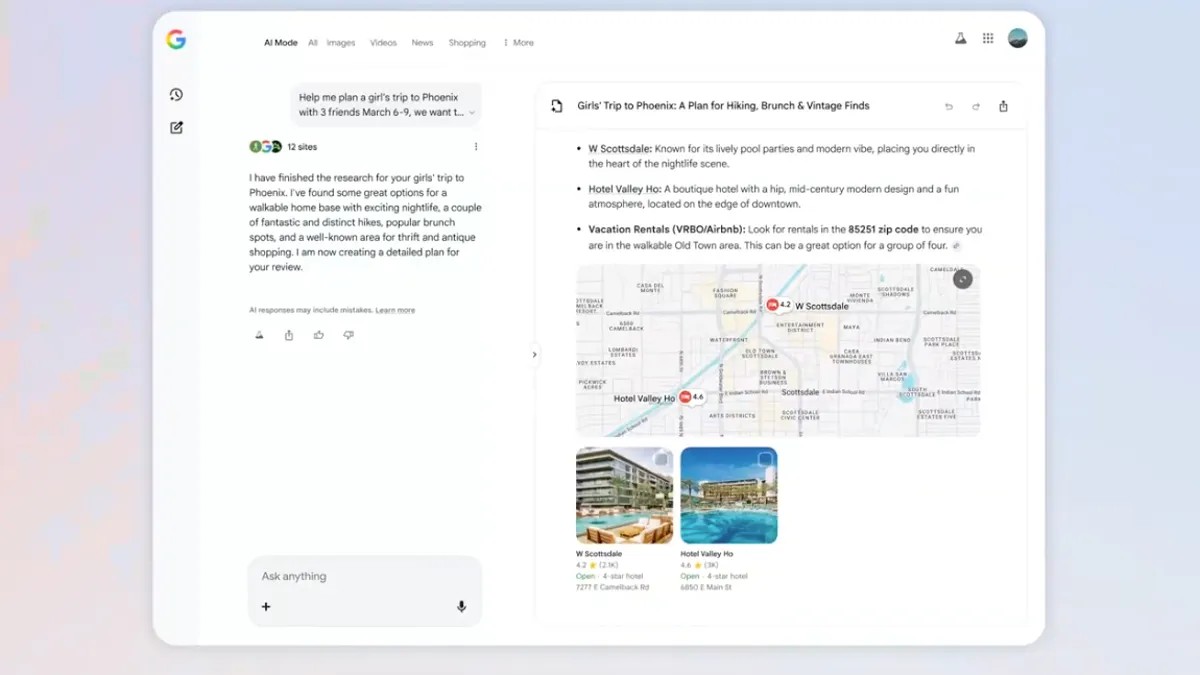
Google is rolling out new artificial intelligence (AI) features designed to streamline vacation planning, from suggesting itineraries and finding flight deals to booking dinner reservations. These updates expand the capabilities of Google’s Canvas planning tool, bringing AI directly into the travel research process.
AI-Driven Itinerary Building
Google’s Canvas tool now uses AI to generate detailed day-by-day trip suggestions based on user requests. During a recent demonstration, the tool created a five-day Tokyo itinerary centered around ramen and pizza restaurants when prompted, even adapting to include nearby gyms upon request. While plans can be shared, collaborative editing is currently limited, meaning users may still prefer shared documents for real-time adjustments.
Automated Flight Deal Discovery
The company is also introducing an AI-powered Flight Deals feature that searches for optimal flights based on natural language prompts. A test search for round-trip tickets from New York to France in March quickly produced a range of available options. This feature leverages Google’s existing flight search infrastructure, now accessible through AI Mode.
Restaurant Search and Reservations
Google’s AI Mode can now identify restaurants and, in some cases, facilitate reservations through integrations with services like Google Maps. While immediate booking isn’t universally available, the system prioritizes options that support reservations, offering both casual and upscale choices based on user preferences.
Context and Implications
These enhancements position Google as a more direct competitor to existing AI travel assistants like ChatGPT, which already offer similar capabilities. However, Google’s advantage lies in its deep integration with travel and booking services, making AI-generated suggestions immediately actionable. The rollout begins as a Google Labs feature, indicating ongoing development and refinement.
These updates signal a broader trend toward AI-assisted travel planning, where users can generate customized itineraries and secure travel arrangements with minimal effort. As AI models improve, expect even more personalized and efficient travel experiences.