Google announced another AI content tool on Tuesday. At its I/O developer conference, really? We are not surprised.
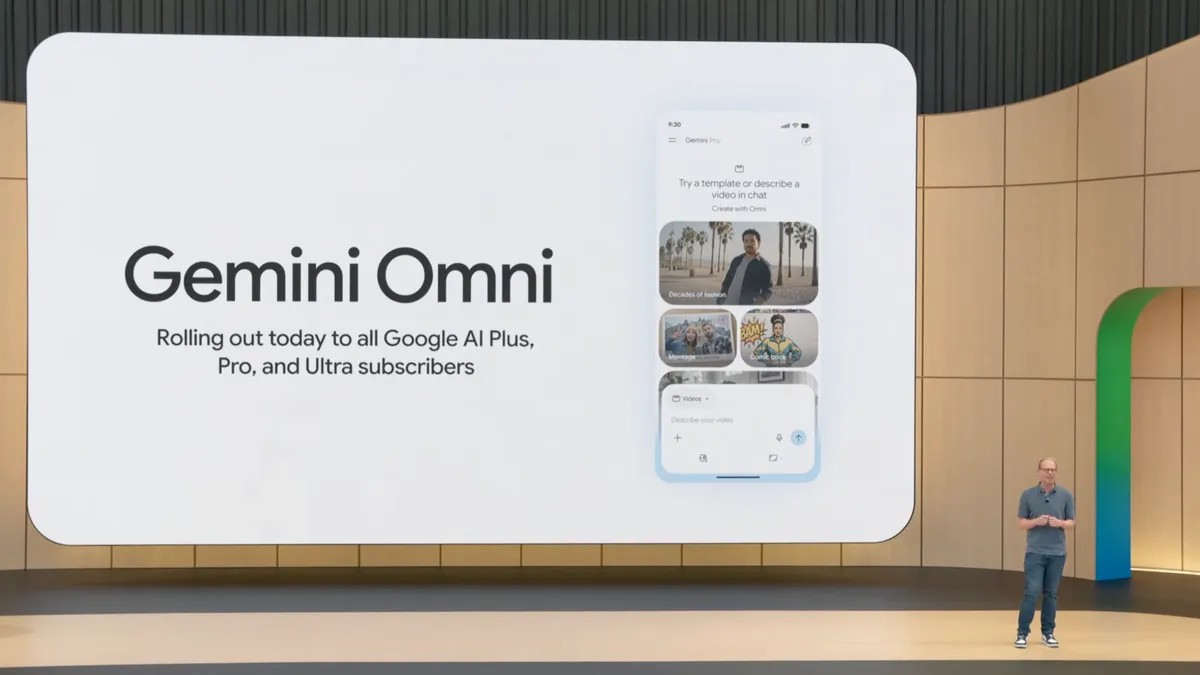
The announcement came from Shoreline Amphitheater in Mountain View, California. Gemini Omni joins the list of agentic AI features like Gemini Spark and Universal Cart. It makes graphics. It makes videos. All based on text prompts you type out.
This feels like a bubble waiting to pop. We already have too many ways to fake reality. Google even launched its own image generator, Nano Banana 2, earlier. OpenAI, Shutterstock, Canva… they all have video generation now. Why do we need more?
Gemini Omni Flash is out already. You can create or edit videos in the Gemini app or on YouTube Shorts right now. Images and audio are coming later. At I/O they showed a claymation-style clip about how proteins form. Maybe that is useful for teaching science to a five-year-old. Mostly though, it is just fuel for the machine. Another shovel for the AI slop mines.
People Are Fed Up
The mood online is sour. A recent CNET survey shows most Americans are tired of the synthetic noise clogging their feeds. More than half (51%) want better labels for AI content. About 20% want a total ban on social media. Just 11% actually find this stuff entertaining.
Yet the AI keeps coming through. 94% of adults say they see altered or fake content every day. Only 44% can actually tell what is real and what is fake. The gap between fear and ability to spot lies is massive.
Google Tries to Have It Both Ways
At I/O Google tried to sound like a responsible steward. They added Content Credentials to the Gemini app. It tracks whether content came from a camera or AI code. It spots edits too. The SynthID detector is still there for verification.
It looks like a fix. But look closer.
Google wants to build the forge and sell the thermometers. It is a paradox wrapped in a developer demo. On one hand, they push Gemini Omni and Nano Banana to generate infinite media. On the other, they promise to help you trace it back. It feels performative. The company is still trying to shove AI into every update, every tool, every crevice of software.
The developer showcase feels out of touch. Consumers are hesitant. We trust AI less, even when it helps in rare moments. We do not need another tool to generate content. We need clarity on data privacy. We do not care about the planning parties or the smart glasses that turn crowds into cartoons. We care about our minds.