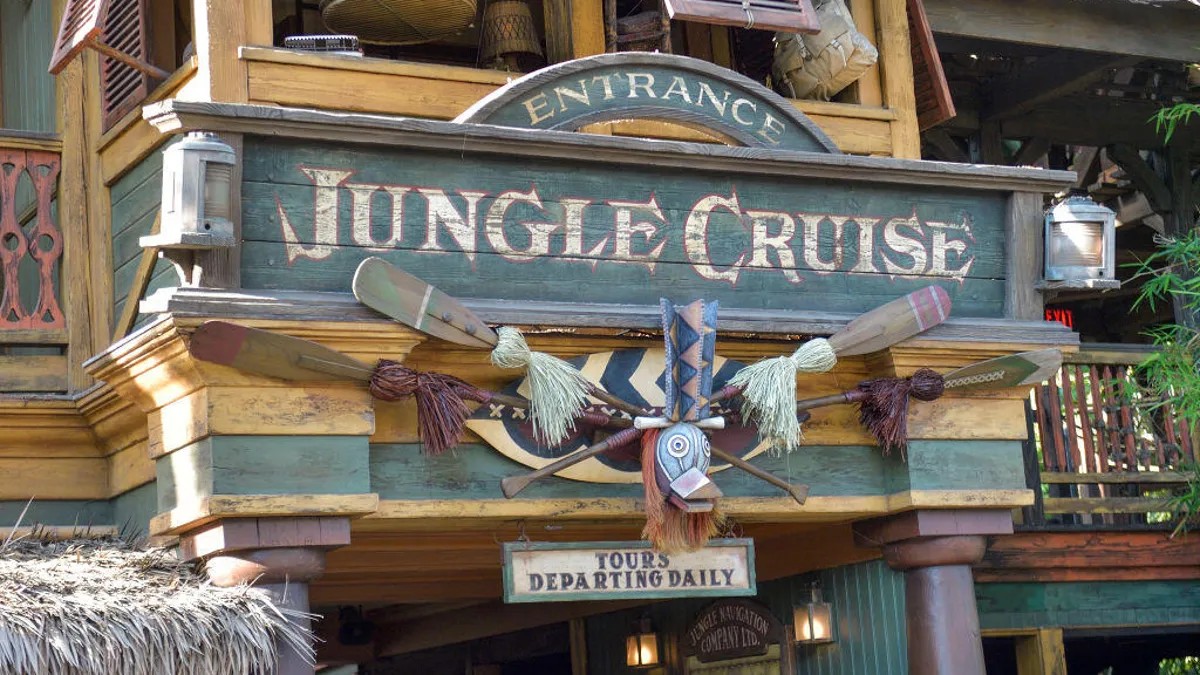
Disneyland has quietly integrated a 3D-printed prop into its iconic Jungle Cruise ride, marking a significant shift towards faster, more flexible fabrication in theme park design. The new canoe, part of the ride’s scenic elements, represents a first step in Disney’s broader adoption of industrial-scale 3D printing to streamline prop and set piece production.
The Rise of Industrial 3D Printing
For years, 3D printing has been a hobbyist tool. Now, however, industrial workshops are capable of producing items on a scale previously unimaginable. Haddy, a Florida-based 3D-printing firm, partnered with Walt Disney Imagineering to install the canoe in the Jungle Cruise queue. According to Haddy’s CEO Jay Rogers, this is just the beginning.
“We can build worlds,” Rogers stated at Disney Demo Day in Burbank, California, signaling a new era of on-demand prop creation.
How It Works: From Design to Reality
The process begins with a digital file—whether for a small toy or a full-sized boat. Large-scale 3D printers use pellets or liquid resin to construct objects layer by layer, offering unprecedented design freedom. Disney Imagineering scanned an existing boat from the 1960s to ensure dimensional accuracy before modeling and printing the new version.
Chris Hill, an associate R&D Imagineer, explained, “We had the old boat, and we did do a 3D scan in order to get it dimensionally…For the creative part of it, we had a photo of the boat from the 1960s, and so using the dimensions from the 3D scan, I modeled the new boat, which is what we used to 3D print the boat.”
Speed and Efficiency: A Game Changer for Theme Park Development
Traditional prop creation can take hundreds of hours, involving multiple mold-making iterations. Haddy claims to reduce this to 70 robot hours. This speed is critical, as Disney seeks to rapidly iterate on designs and respond to changing park needs.
Nick Blackburn, Disney’s executive of technical business operations, emphasized the strategic value: “This project right now is the premiere project that we’re working on to show that we can use advanced fabrication, robotic manufacturing and new materials to bring parks to life faster and more effectively.”
Beyond the Canoe: Future Applications
Disney’s ambitions extend beyond the Jungle Cruise. The company is exploring 3D printing for other attractions, including elements for the upcoming Monsters, Inc. ride at Walt Disney World and even furniture for hotel rooms. The potential for cost savings and rapid prototyping makes this a highly attractive avenue for expansion.
Michael Hundgen, a creative producer at Walt Disney Imagineering, said, “We’re not just creating technology for technology’s sake; we’re doing it to help our creative teams bring the stories from the company to life.”
The integration of 3D printing into Disney’s operations marks a turning point in theme park construction. By embracing automation and rapid prototyping, Disney is positioning itself to enhance the speed and efficiency of its creative processes, ensuring that the magic continues to evolve at an accelerating pace.