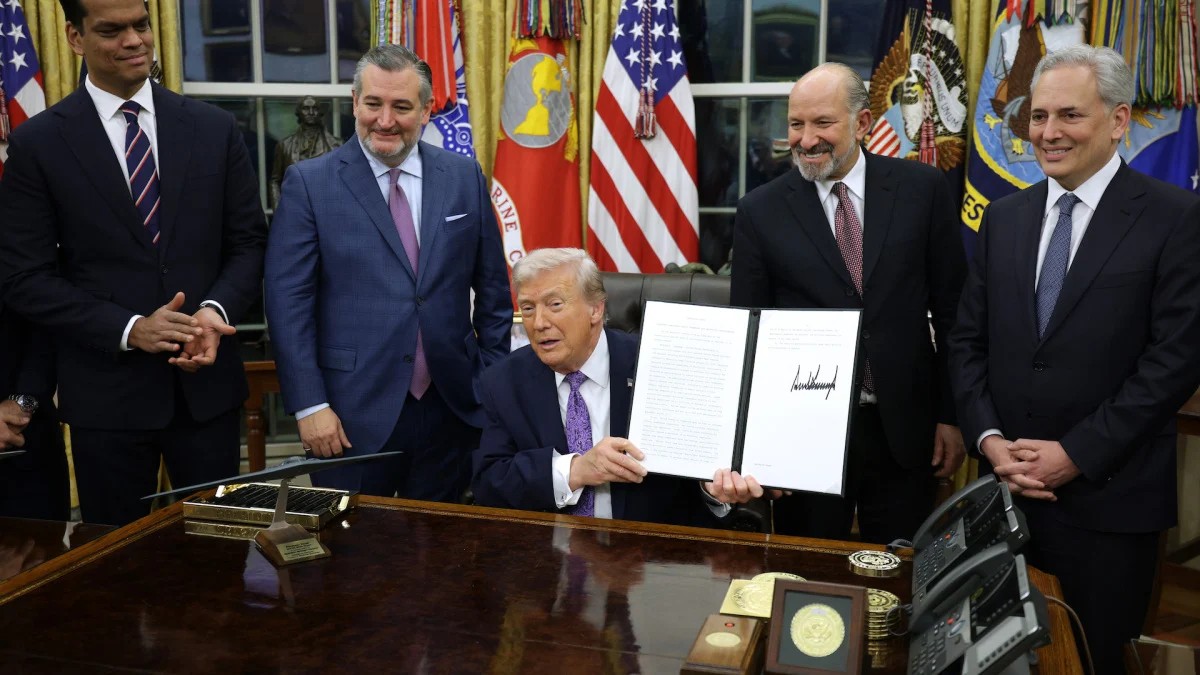
The Trump administration has taken a decisive step towards nationalizing control over Artificial Intelligence (AI) regulation, issuing an executive order that could financially penalize states with AI laws deemed too restrictive. The move, championed by tech venture capitalist David Sacks—a key advisor to the president on AI and crypto—aims to streamline innovation by limiting state-level oversight.
The Core of the Order: Federal Supremacy in AI
The executive order explicitly states that U.S. AI companies must operate free from “cumbersome regulation” to maintain competitiveness, particularly against China. To enforce this, the federal government may withhold grants for high-speed internet access from states enacting AI laws that conflict with the administration’s policies. This financial leverage could effectively coerce states into aligning with a looser regulatory framework.
The timing of the order is notable. As states like California and New York begin implementing transparency requirements, whistleblower protections, and safeguards for teen users, the federal government is asserting its authority. The move comes despite growing public concern over the unchecked influence of AI, highlighted by recent lawsuits against OpenAI linked to teen suicides following chatbot interactions.
Backlash and Controversy: A Gift to Silicon Valley?
Critics are already framing the order as a win for tech oligarchs. Michael Kleinman of the Future of Life Institute called it a “gift for Silicon Valley,” pointing out that no other major industry enjoys such a complete lack of baseline safety oversight. The reality is that AI development, unlike pharmaceuticals or even cosmetology, operates largely without legally enforced protections.
The administration’s previous attempt to impose a 10-year moratorium on state AI regulation—dubbed the “One Big Beautiful Bill Act”—failed spectacularly in the Senate, passing with only one dissenting vote out of 100. The current executive order faces similar skepticism, particularly from conservative factions who oppose industry-led deregulation. Even some Trump allies, like Steve Bannon, remain staunchly against loosening oversight.
The Bigger Picture: Why This Matters
The centralization of AI regulation under the federal government raises fundamental questions about accountability and public safety. The U.S. is one of the last major economies to allow this level of unregulated growth. If this executive order stands, it will cement the nation’s position as a haven for unchecked AI development—a move that could accelerate innovation but at the potential cost of consumer protection and social stability. Whether the courts or political opposition will halt the order remains to be seen.